









































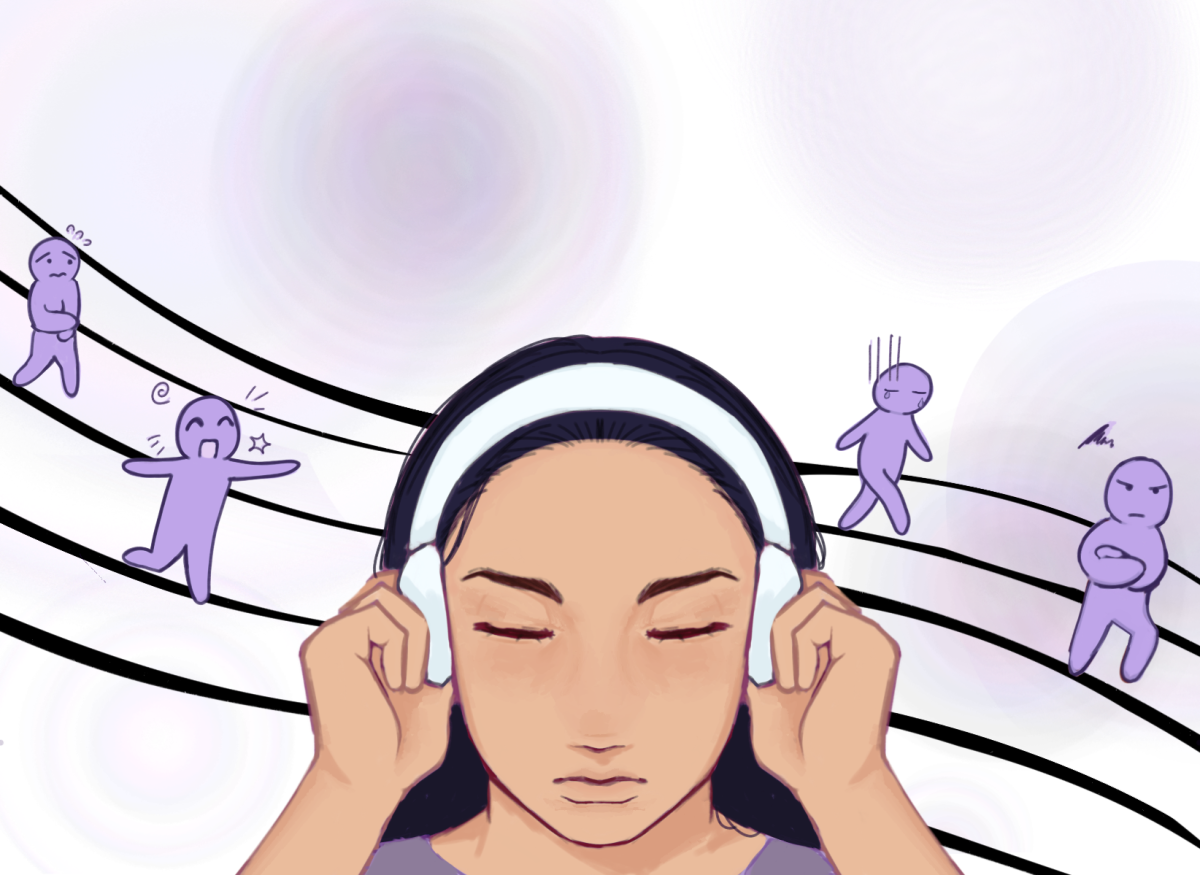
Heart pounding, mind racing, sweating profusely; many teenagers share one coping mechanism when faced with anxiety, listening to music. Despite the popularity of the activity, a vast majority are unaware of the impact music can have on the brain that reflects on their mood.
The brain reacts considerably when exposed to music, which affects cognitive function that scientists claim as beneficial for a person’s well-being.
“Music also lights up nearly all of the brain — including the hippocampus and amygdala, which activate emotional responses to music through memory; the limbic system, which governs pleasure, motivation, and reward; and the body’s motor system.” an article by Harvard Medicine states. Studies have shown these benefits may be different depending on the flavor of the music.
Sad and happy music are two sides of the same coin; somber music acts as an aid for emotional regulation while happy music can change your perspective on an anxious situation.
“Listening to happy music can influence the way one perceives the world in a stressful situation. For example, upbeat tunes can give you an optimistic outlook and make you feel better,” Shahram Heshmat Ph.D., an associate professor emeritus of health economics of addiction at the University of Illinois at Springfield, explained. “Sad music enables the listener to disengage from the distressing situations (breakup, death, etc.), and focus instead on the beauty of the music.”
Depending on the longevity and quantity of sad music, however, it may intensify feelings of continual sorrow yet comfort depressing moods. This happens due to a chemical in the brain called prolactin.
“The hormone prolactin, usually released in response to tears, grief, and sadness, acts to encourage us to form attachments with other people and bond.” Barbara Blatchley Ph.D., a professor of Psychology and Neuroscience at Agnes Scott College in Decatur, Georgia reported. “Prolactin is also secreted when we listen to sad music. This may make us feel comforted and consoled.”
Looking past the brain chemistry, individuals contradict themselves while indulging in sad media to make themselves feel better while avoiding a similarly somber situation in real life. Experts call this the tragedy paradox: where people avoid anguish in their own lives, admiring the art and finding comfort in it.
As researchers continue to study the correlation between music and mental well-being and explore how music affects brain chemistry and mood; teenagers and adults can become more informed as they relate to music when they experience anxiety or anguish.


Makenzie Spang • Apr 8, 2026 at 1:27 pm
I had to look up the definition of “neuromusicology”. It’s really interesting to see the psychological side of how the brain responds to music! I liked the comparison of what happy vs. sad music does in regards to emotional and hormonal regulation.
Mr. Weddel • Apr 8, 2026 at 10:54 am
Did you know that corporations are also researching music? I mean not for your mental well-being, no that would be silly, they’re studying music and how to use it to Influence you… As well as your spending habits.
The older generation might remember going to the Drive-In movie theatre, which featured snack adds for the concession stand that not so subtly had subliminal messages, using hidden sounds/visuals to stimulate your subconsious into getting a sweet treat.
Well, since then the tech has gotten way more advanced and now buisnesses everywhere are subconsiously affecting you throught the music they have playing when you’re in their establishments. Affecting your mood, creating a vibe, for example, different musical styles give rise to very different atmospheres. Pop music might lead to the perception that a coffee shop is lively and youthful, and classical music might lead to the perception that the café is upscale and sophisticated.
Studies have shown that the tempo of background music also influences consumers’ pace of action, and businesses use this knowledge to address their most important marketing goals. For example, if the goal is to turn the tables faster and seat more customers, faster music is typically used. However, at quiet times, it makes sense to play slower music in the hope that customers will stay longer and spend more money. – If you’d like more info about the science behind it, come talk to Dr. Harman or Myself we’d love to have a conversation, or you could learn about it by taking a Music Appreciation class (offered for dual credit) here at FHS.