






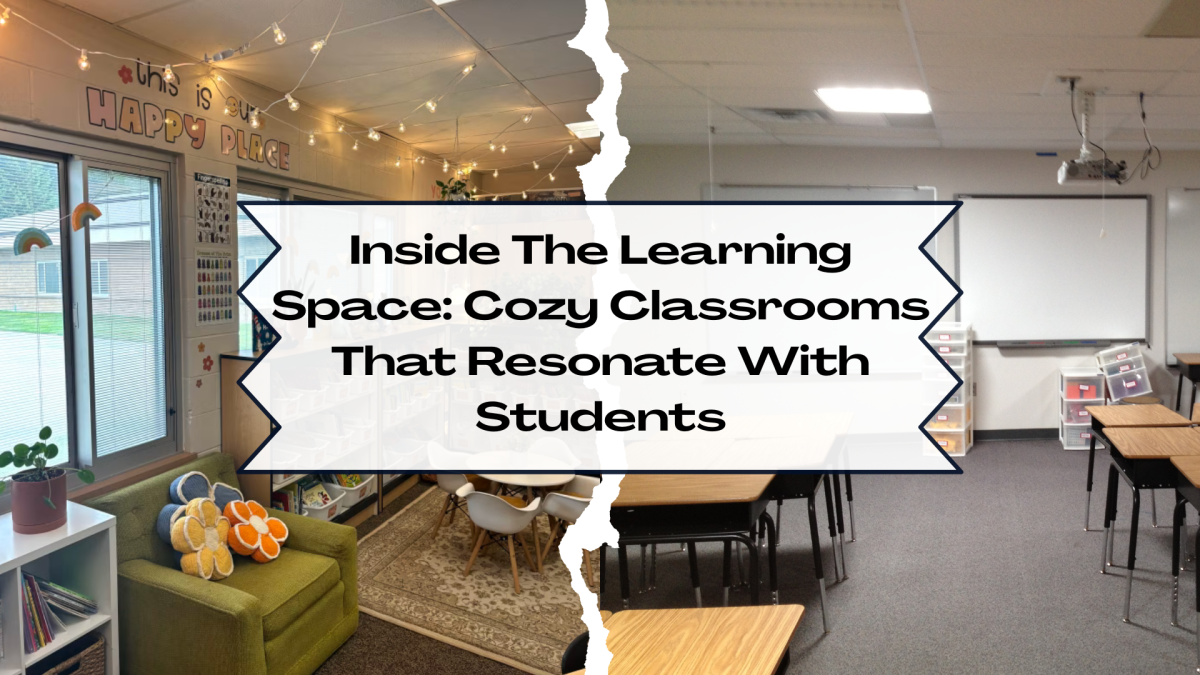




































Long class periods have become a “normal” feature of many high schools globally, typically found in block-schedule class systems where each class lasts around an hour and a half. These long stretches are intended to provide more meaningful instructional time, yet they create a harmful routine. Students have to sit almost completely still for the entire period. What may look fine on the surface covers a growing concern supported by research.
Long and uninterrupted sitting is associated with reduced blood circulation, decreased cognitive function, physical discomfort, and a noticeable drop in students’ ability to maintain focus. Classrooms are built around the assumption that sitting still improves learning, but a widening body of scientific evidence proves the exact opposite.
A 2024 review on sedentary behavior in schools found that long periods of sitting are part of the daily routine of children and adolescents. Many factors designed to interrupt that sitting have been shown to improve physical activity levels, musculoskeletal comfort, and learning-related behaviors. This review, published through BioMed Central, highlights how deeply sedentary classroom habits are now considered normal and how strongly they influence students’ health and performance.
Another review from the National Institutes of Health reported that “active desks,” such as standing desks or desks that allow light movement, have been associated with increased energy, improved attention to the topic, and better mental control among students ages five to seventeen. These are not small outcomes. They create a pattern: when students are given even the smallest opportunities to move, both the body and the brain function more efficiently.
More evidence comes from recent research on the cognitive effects of breaking up sitting time. A 2024 study published in BMC Public Health examined young adults who engaged in short, frequent physical-activity breaks during prolonged sitting periods. The students who incorporated these movement breaks maintained healthier cerebral blood flow in the prefrontal cortex, a region of the brain essential for executive functions, including working memory and problem-solving.
The same study also reported large improvements in working memory following movement breaks. In other words, the adolescents who were allowed time to move were better able to think. When compared to the typical structure of a ninety-minute high school class, where students are expected to sit uninterrupted, the difference is striking.
Several additional studies support this finding. For example, a study targeting children aged six to eight showed that simple activity breaks throughout the school day significantly reduced total sitting time and increased standing time, demonstrating that young students naturally benefit from even occasional movement. Although the cognitive effects were mixed in that age group, the physical benefits were clear.
Research on older adolescents found that classes incorporating occasional “standing or moving” resulted in higher levels of both concentration and engagement. Students in that study also took over 800 more steps during classes with movement breaks than during classes without them, which resulted in students self-reporting that they felt more awake and mentally present. Far from being disruptive, these small transitions acted as brain resets.
The physical consequences of uninterrupted sitting also deserve attention. The science of sedentary behavior shows that prolonged inactivity slows circulation, reduces vascular responsiveness, and increases discomfort. Although these issues may appear more relevant to office workers, the physiological effects apply almost equally to young adults whose bodies remain in chairs for long blocks of time. A trial found that even adults experienced reduced arterial blood flow and vascular function after a period of uninterrupted sitting.
While students are younger, the basic mechanisms—blood pooling in the lower body, reduced circulation to the brain, and muscular tension—are the same. It is no surprise that many students describe feeling foggy, stiff, or restless during the last half hour of a long class period.
Psychologically, long periods can create a sense of heaviness that makes learning more difficult. The human brain is not separate from the body that holds it. Classroom environments that demand stillness for ninety minutes risk diminishing the very focus they expect.

Students often try to push through the physical discomfort, but discomfort clearly pulls attention away from learning. Restlessness increases, and mental fatigue builds easily. When class structure assumes that the body can remain silent while the brain stays sharp, it ignores the reality of how cognition actually works.
Despite this evidence, many schools continue to resist movement-based approaches. A study on student perceptions of “double lessons” found that adolescents often viewed long class periods as restrictive, mainly because they eliminated opportunities for movement between periods. Many teachers express concerns about discipline or the need to preserve instructional time. Quiet classrooms are still commonly equated with productivity, even though research increasingly contradicts that assumption.
Several possible solutions do not require packed class schedules. One of the most effective, backed by the 2024 adolescent study, is simply introducing short, frequent movement breaks during long sitting periods. These can be as brief as one minute of standing or stretching every half hour.
Standing desks or active desks offer another option. The NIH review suggests that they improve both physical health and attention without disrupting learning. Even flexible seating—allowing students to stand at the back for a few minutes or work from different positions—has been associated with reduced sitting time and greater comfort.
Some schools have redesigned lessons into shorter segments with small transitions between learning and breaks built in. This has proven to be a strategy that preserves the academic effectiveness of block schedules while protecting student well-being.
As the scientific community continues to highlight the dangers of excessive sedentary behavior, schools have a responsibility to ensure that academic structures do not unintentionally create health risks. In addition, the toll of prolonged sitting on the brain directly affects academic performance. If long seated periods reduce blood flow to the brain and impair working memory, then schools are not maximizing learning; they are compressing it.
Education has always been about developing minds, but it cannot meaningfully serve that purpose without acknowledging the role of the body. A growing group of researchers suggests that learning environments must respect the human need for movement. Students learn best when their bodies support their brains, not when they are constrained in ways that harm their biological and cognitive needs. Small changes, such as movement breaks or flexible seating, have the potential to significantly improve both comfort and academic performance.
As schools seek to prepare students for a world that demands critical thinking, it is counterproductive to force those students into physical conditions that weaken the very skills they are expected to develop.
The evidence is strong and consistent. Movement enhances focus, preserves circulation, and supports cognitive performance. Expecting students to sit silently for an hour and thirty minutes without a single stretch contradicts what decades of research now show. A thoughtful reconsideration of classroom structure could transform not just comfort levels, but the effectiveness of learning itself.







Mayrin Lopez • Apr 30, 2026 at 1:34 pm
I always get super tired in bored in the block schedule because It’s over an hour of just sitting down. I love
Mayrin Lopez • Apr 30, 2026 at 1:31 pm
I always get super tired in bored in the block schedule because It’s over an hour of just sitting down. I love this article!!