








































In many households, cats are cherished companions. However one common practice continues to raise serious ethical concerns: declawing. It’s often thought of as a harmless way to address scratched furniture and minor injuries. In reality, it is a very controversial surgical procedure that deserves far more scrutiny than it typically receives. From both a medical and ethical standpoint, it is difficult to justify and experts have increasingly agreed it should be abandoned altogether.
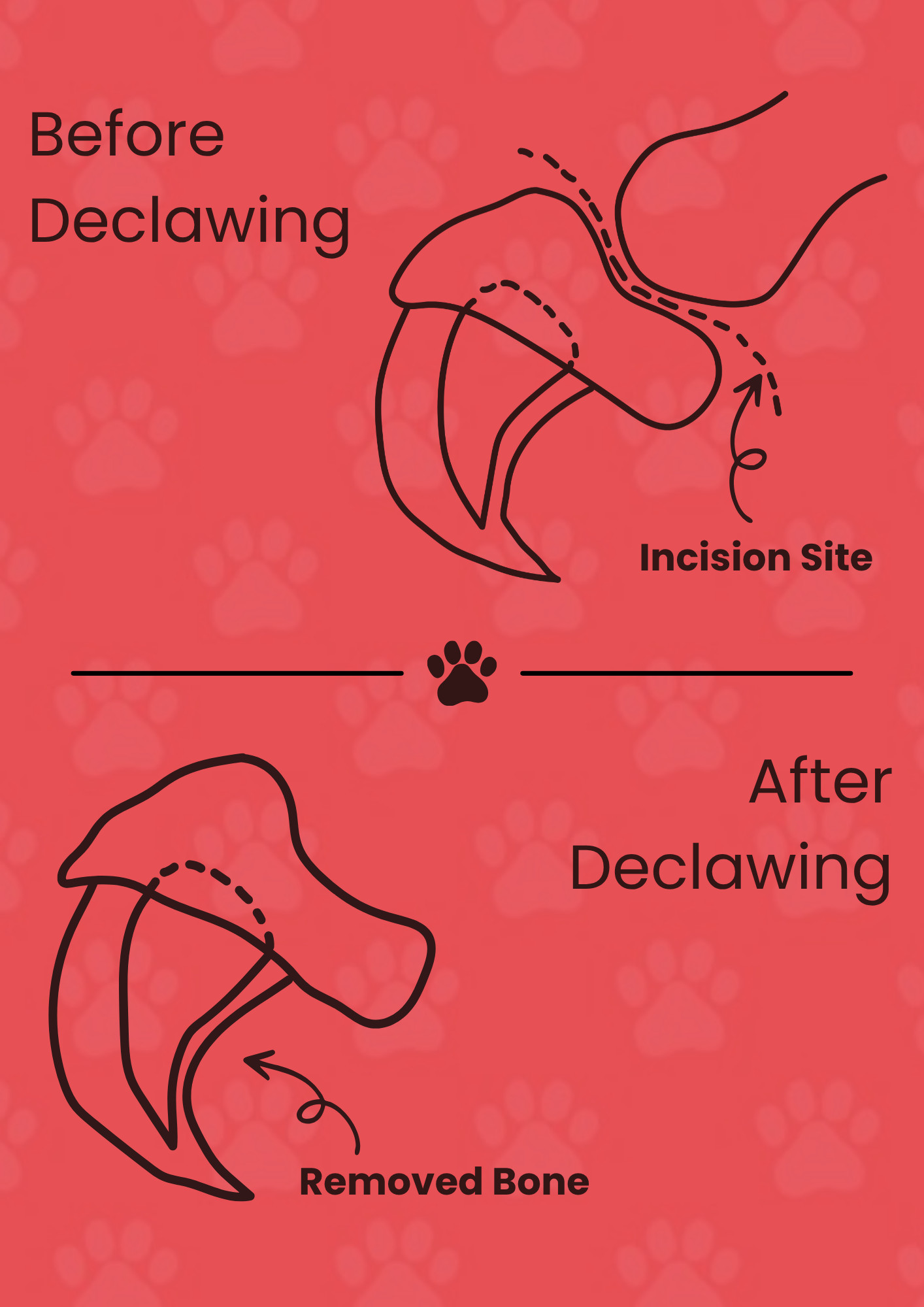
Contrary to popular belief, declawing is not just removing a cat’s claws. The procedure, medically known as an onychectomy, involves amputation of the last bone of each toe. In simple, human terms, it would be the equivalent to cutting off each finger at the last knuckle. This is not a cosmetic trim, it is a major surgical intervention that permanently alters feline anatomy and life function.
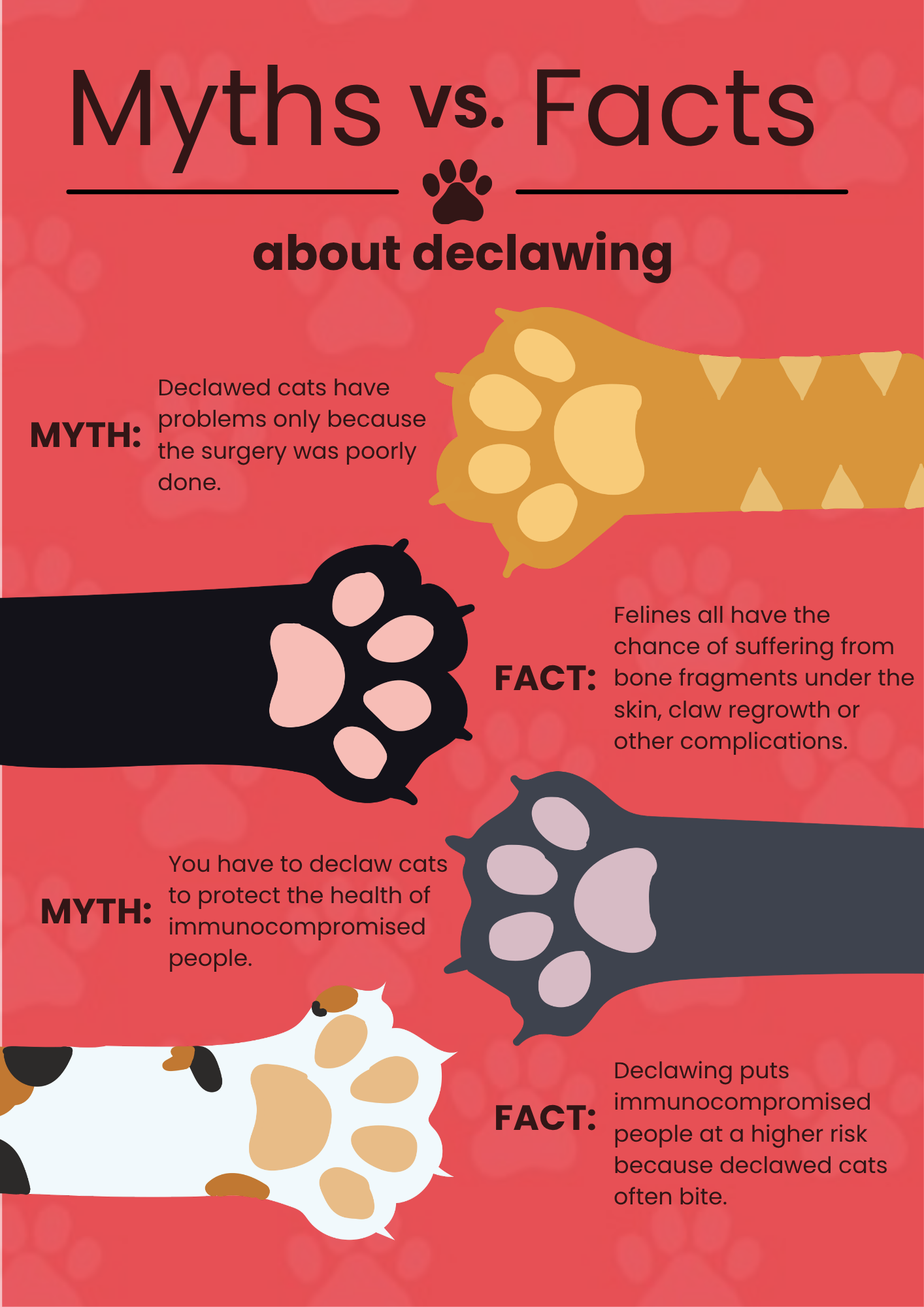
Many organizations, including the American Veterinary Medical Association, acknowledge that declawing is a serious, dangerous procedure, though they do not call for an outright ban of the practice. Veterinary associations worldwide, like the Canadian Veterinary Medical Association, have also taken strong stances opposing onychectomies, citing both welfare concerns and the availability of humane alternatives.
The immediate risks of declawing include pain, infection, necrosis and damage to surrounding tissue. But the long-term effects are often far more troubling. Cats rely on their claws not just for defense, but for balance, stretching and natural behaviors such as scratching. Removing them can lead to chronic pain and difficulty walking for the feline. Another major risk is the possibility of the claws being improperly removed, which may cause major nerve damage or bone spurs.
Declawed cats often become more aggressive or anxious. Without claws as a defense mechanism, some cats resort to biting. Others may stop using the litter box due to pain in their paws when digging, leading to frustration for owners and, in some cases, abandonment of the animal. Studies in veterinary science have increasingly linked declawing to higher rates of behavioral problems. This raises an important ethical question: is it acceptable to subject an animal to lifelong physical and psychological harm for the sake of human convenience?
At its core, the ethics of declawing come down to a conflict between human preferences and animal welfare. Scratched furniture can certainly be frustrating, but it is a problem that can be managed with scratch posts and proper enrichment. Declawing, in contrast, is an irreversible solution with severe consequences for the animal. Increasingly, lawmakers are beginning to acknowledge the harms of onychectomies. Declawing has been banned or heavily restricted in many countries and some U.S. cities, signaling a shift in public attitudes. The trend suggests a growing recognition that the practice is outdated and ethically problematic.
One of the strongest arguments against the surgery is that it is unnecessary. There are numerous humane alternatives that address the root causes of scratching without harming the feline. Providing scratching posts, regular nail trimming and using nail caps are all effective strategies. Training and environmental enrichment can also reduce destructive behavior. In many cases, scratching is simply a natural expression of a cat’s instincts, one that can be redirected rather than eliminated. Veterinarians and animal welfare organizations consistently emphasize these alternatives. The Humane Society of the United States strongly opposes declawing and advocates for non-surgical solutions that respect the feline’s well-being.
Ultimately, owning a cat comes with responsibilities, not just to care for it, but to respect its nature. Cats scratch, it is a fundamental part of who they are. Choosing to bring a feline into one’s home means accepting that reality and finding ways to coexist with it. Declawing is an attempt to reshape the animal to fit human expectations and convenience, rather than modifying the environment to meet the cat’s needs. This raises the broader questions about how animals are treated under human care, and whether convenience should ever come at the cost of their welfare.
The ethics of cat declawing are becoming increasingly clear. What was once considered a routine procedure is now widely regarded as a harmful and unnecessary practice. With a plethora of accessible alternatives and growing awareness, there is little justification for the continuation of the practice. As attitudes evolve, the hope is that declawing will become a relic of the past, replaced by much more humane approaches that honor the well-being of the cat.
Resources to help prevent furniture scratching:
6 Ways to Redirect Cat Scratching
What to Do About Your Cat’s Scratching Habits
Preventing Furniture Scratching: Effective Strategies for Cat Owners