






















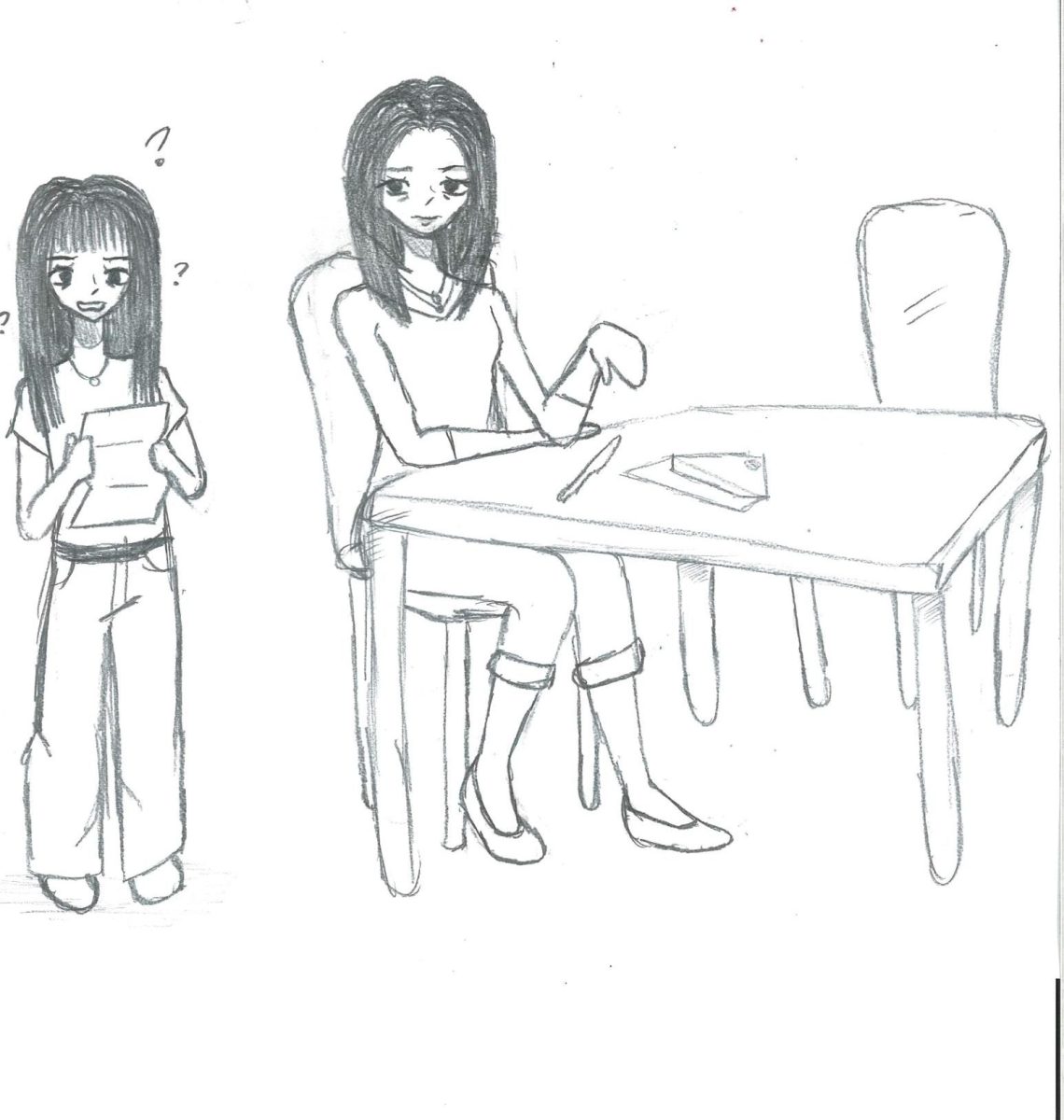


Whether it is a teacher asking how to solve an algebra equation in math class or a teacher asking what important event began in 1775, most students hardly do anything but stare with blank faces at their teachers, waiting for a response. It is not out of pure disdain for learning—although I am sure that plays a significant role for some—but more so the fear of being wrong or made fun of.
In today’s society, I have often noticed that speaking up or being ‘different’ is one of the scariest things a person can do. Many students are scared to raise their hand in school, voice an unpopular opinion, or simply share what they did over the weekend in front of the class. They play it safe and choose silence over genuine human interaction.
Despite this observation, there seems to be a striking and honestly overwhelming contradiction to my previous statements. When it comes to criticizing, judging, hating or even bullying, those same students hiding behind the silence are sparked up with confidence to gossip, mock or spread online negativity. This poses a troubling question: What makes us, as humans, so afraid of embracing individuality and engaging with others but unafraid of expressing cruelty?
Part of this can be traced back to the universal experience: COVID-19. With the rewiring of the brain due to the lack of social settings, many lost or never gained the ability to read body language, distinguish tones, or navigate in-person tension. With that being said, this level of inhumanity extends beyond two years of no social interaction.
Screens became the means of communication. So when it was time to return, many turned to sarcasm, humor, animosity or cynicism. People were more willing to become cruel and mock someone else’s confidence than risk showing their own. People won’t let themselves be uncomfortable with new emotions and thus never learn to navigate them. I am no exception to this, I’ll admit.
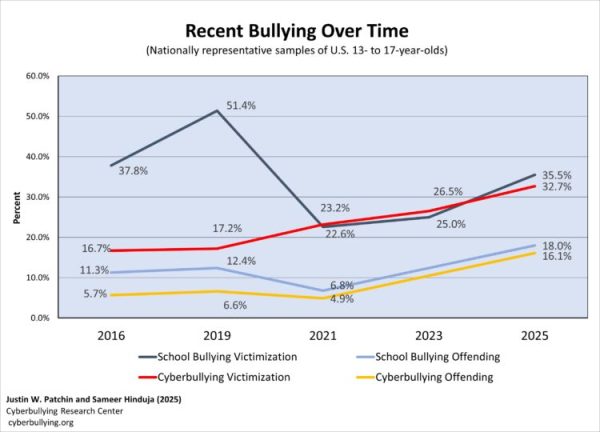
The Cyberbullying Research Center, a website dedicated to researching bullying rates, states: “In 2016, 12.4% of students told us that they had been cyberbullied in a way that ‘really affected my ability to learn and feel safe at school.’ In 2025, that number nearly doubled to 23.3%.”
But while the pandemic significantly changed the way we view and navigate the world today, it cannot, and should not, justify these behaviors or mindsets. At some point, these actions are strictly out of habit, which might just be worse. We can acknowledge that the isolation affected the development of empathy and social skills, but the world cannot afford to go on without it.
Gossip is entertainment. Failure of others is humor. Insults are friendly and ‘just jokes.’ Indifference is cool and nonchalant. Even staying silent or refusing to speak up when someone is being mistreated plays a part in enabling it all. It appears sincerity is embarrassing, and kindness feels out of place.
Now I can’t say I am someone who has always been in the right. I had my moments of fear, even when I knew I was strong enough to do the right thing, but the bystander effect kept me laughing along despite my concern over my actions. There are even some moments where I hesitate to simply compliment someone out of fear of making them uncomfortable with an unusual gesture. However, despite my fear, I have gained a newfound confidence and realization. It is not about having the loudest opinion in the room, but about having the courage to act with decency when others don’t and speak despite a trembling voice.
There is always talk about change within the school and on social media—about wanting to see a better school environment, better mental health, more engagement with better people—but that change never seems to happen because no one is brave enough to start acting better. I often hear classmates say things like “I am going to mind my business” or “I don’t care what people think of me,” even “they don’t have to like me, I don’t even like them.” Yet we scroll through the hate, share it, and continue to fuel it or become it.
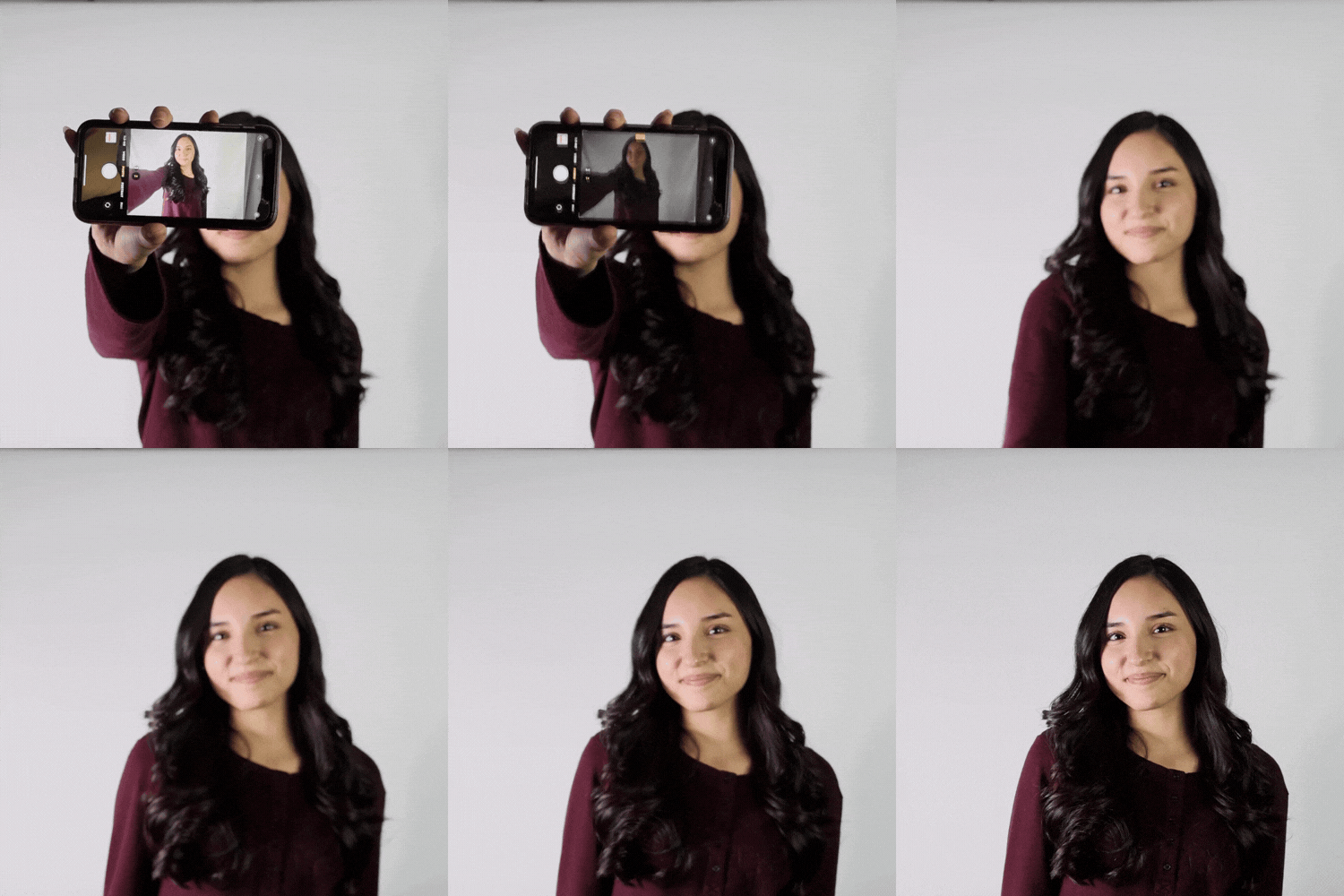
This pattern shows not only in classrooms, but also on multiple online platforms. For example, I began to notice a trend emerging on the popular app TikTok. It is a trend that is seemingly harmless and rather endearing, but turns hostile in the double-tap of a screen. This trend consists of a group of people asking someone to record them while they film their TikTok. As they get through the audio, one of the members inconspicuously walks to the screen and flips the camera around, or double-taps on the screen, to show the person recording and attempts to conceal the fact that they are being recorded and laughed at.
This trend, again seemingly harmless, has sparked controversy because of the reactions of those on the other side of the screen. These people target random people who are nonetheless happy to record and do something nice for the group, as well as people who are considered on the lower side of societal standards.
No one wants to be the target of negative attention. This action is bullying. Both online, as it is being shared on the internet without consent, and in person.
So how do we stop this? Because we certainly cannot go back to where it all started. Phones and social media will not be going away in the foreseeable future, so we must start small. Say what you actually think in class in a respectful manner. Compliment someone’s hair or outfit. Defend someone when it seems unpopular to do so. Stop apologizing when you get passionate about a topic that piques your interest. In truth, people who are authentically themselves were never the problem.
It is the ones who are far too afraid to be real who turn that fear into cruelty, who mistake judgment as confidence and silence for safety. It takes absolutely zero bravery to mock someone or something from behind a screen or underneath your breath. But it takes real courage to show up as nothing but yourself.
That nonchalant and untouchable facade hurts more in the long run than kindness and vulnerability, or even just basic human decency, ever will. So the question is this: who’s the first person you are going to lift up after this? If everybody ignores the call to be better—and many will—the least you could do is start with yourself. What is there to be so afraid of?