





































Under Nebraska’s LB140, students are held to strict standards for classroom behavior, especially regarding cell phone use. Administrators and teachers emphasized that cell phones are distracting and interfere with learning. Students faced consequences ranging from warnings to in-school suspension for using their devices. The message was clear: students are expected to stay focused to succeed.
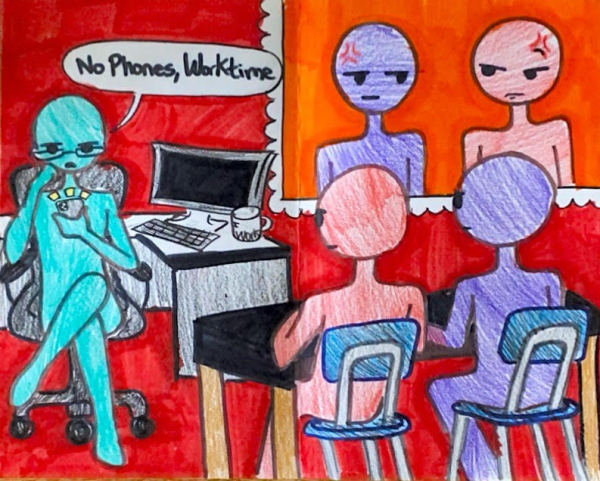
Yet a noticeable double standard exists. While students are disciplined for phone use, many teachers are seen scrolling through their own devices during class. According to a recent EdWeek survey, nearly half of students have witnessed teachers using phones for non-instructional purposes. Whether a teacher is texting or checking social media, the behavior undermines the expectations placed on students. Respect in the classroom weakens when rules are not modeled consistently.
The concern extends beyond cell phones. More teachers are turning to artificial intelligence tools to grade assignments and create lesson plans. According to a 2024 Pew Research Center report, about 60 percent of teachers use AI in some capacity. While technology can be helpful, students often receive generic, computer-generated feedback instead of meaningful comments tailored to their work. Knowing a machine graded your assignment can feel discouraging and devalue the effort put into learning.
Supporters argue that teachers face overwhelming workloads. Large classes, heavy grading and limited planning time make the job challenging. Technology can provide relief, but that explanation does not remove the frustration students feel when expectations are not shared equally. Standards hold weight only when they apply to everyone in the classroom.
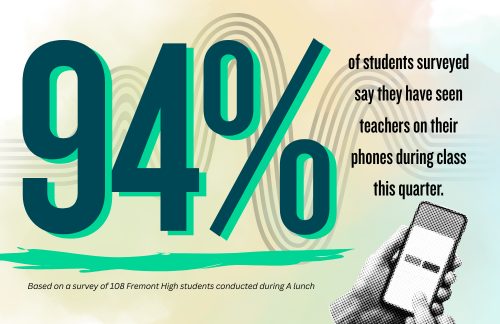
State law provides necessary rules, and students understand the reasoning behind them. But when those rules are enforced only on students and not teachers, they create division rather than accountability. If students are expected to avoid technological distractions and complete their work without shortcuts, teachers should be expected to do the same. Classrooms function best when everyone demonstrates the same level of commitment and responsibility. Right now, that balance is not being shown.
We live in a school system that often pays closer attention to the mistakes of students than teachers. Searching online for “teachers on their phones” usually produces explanations and justifications. Searching “students on their phones” tends to produce stereotypes. This imbalance influences school policy and shapes how responsibility is distributed.
So teachers, the next time you’re in a staff meeting, ask yourself: Am I really paying attention, or am I scrolling through Amazon or checking real estate listings or playing Wordle on my Chromebook while someone else is speaking? In that moment, you’re modeling the same disengagement we are told to avoid. And in the classroom, when you ask students to put their phones away, consider whether your own device is out of sight too. The expectations we set only matter if we are willing to follow them ourselves.
Ultimately, education works best as a partnership. Students invest time and effort with the expectation that teachers will do the same. When teachers disengage, the balance breaks and students feel the impact. If Nebraska schools want policies to be respected, those policies must apply to both students and teachers. Accountability is strongest when it is shared.


Alexa Rasmussen • Apr 30, 2026 at 9:23 pm
This is beyond so true and amazing!
Madelyn • Apr 30, 2026 at 2:39 pm
I completely agree with this article; it is very well written, and what it says is absolutely true: both students and teachers must follow the same rules. After all, what good does it do to tell students to put away their phones if you yourself are setting a clear example of using a phone during class hours?
AB • Apr 30, 2026 at 12:48 pm
Admittedly, teachers are the worst students.