

































A fire alarm signals in classrooms. Blue lights flash in noisy areas of the school. Teachers, calm, cool, and collected, grab their red drawstring bag as part of emergency procedures. The bag contains teacher’s rosters, a folder of all the emergency information and even a stop the bleed kit. They guide their students to the designated zones, stand outside and hold up their green okay signs. All clear and everyone goes back into school for continued learning.
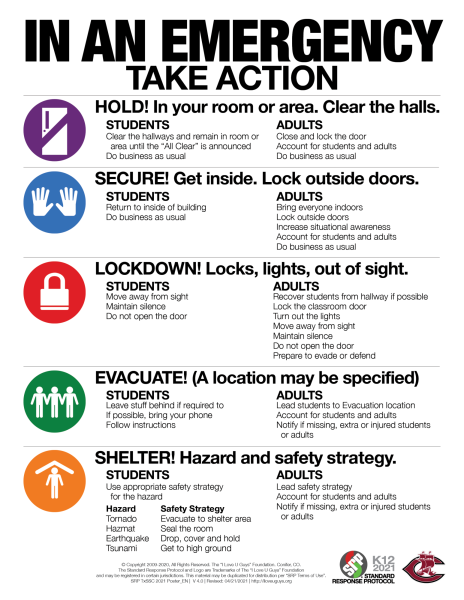
The educators at Fremont High are not just there to teach students, but also ensure that they follow all the safety guidelines set in place. The Fremont District uses a protocol known as Standard Response Protocol (SRP). which provides students and staff clear instructions on what they need to do in the event of an emergency. Teachers take on this responsibility while simultaneously having to teach classes ranging from 20 to 40 students.
From big to small safety measures, teachers like business teacher and football coach Chase Lipsys work diligently to build a safe classroom environment.
“As the teacher, I need to be on the lookout for things like using technology and materials correctly, monitoring Securely passes, preventing classroom accidents, etc. Some of these things can sound ridiculous, but they play a large role in student and classroom safety,” Lipsys said.
This is all done while teaching and managing a classroom full of students, who at times can get distracted and not pay attention. However, the district’s structured and efficient emergency response system, managed by District Security Coordinator Kevin Kavan, helps teachers balance their instructional and safety responsibilities.
Under the advice and instruction of Kavan, teachers completed Stop the Bleed training last year. Staff watched videos, completed a quiz and participated in hands-on demonstrations to prepare for medical emergencies. This training is given to the teachers to ensure they can remain calm and know what to do if an emergency were to occur.
Ashley Bignell, an English and social science teacher, gave her perspective on why she believes reacting calmly is the best possible response.
“I tend to stay pretty calm in stressful situations. I mean why stress about something that is out of your own control?” Bignell said. “Plus, freaking out isn’t going to help anyone. Most students will follow teachers’ examples in an emergency and look to them for help or answers. If we stay calm, that will help all involved.”
Several other teachers at Fremont agree that remaining calm is the most effective way to respond during emergencies.
While lesson plans and grading are part of a teacher’s daily routine, ensuring student safety is an equally important responsibility that teachers take on.
Teachers are more than educators. They are mentors, counselors, role models, and, most importantly, peacekeepers and enforcers of safety. Without teachers, there would be no one to carry out the protocols and rules set in place that are made by those who oversee public school safety.
Safety is vital for maintaining a healthy learning environment. Through the professional guidance and oversight of Kavan, teachers like Bignell and Lipsys are equipped with the tools and training needed to make Fremont High a safer place.