









































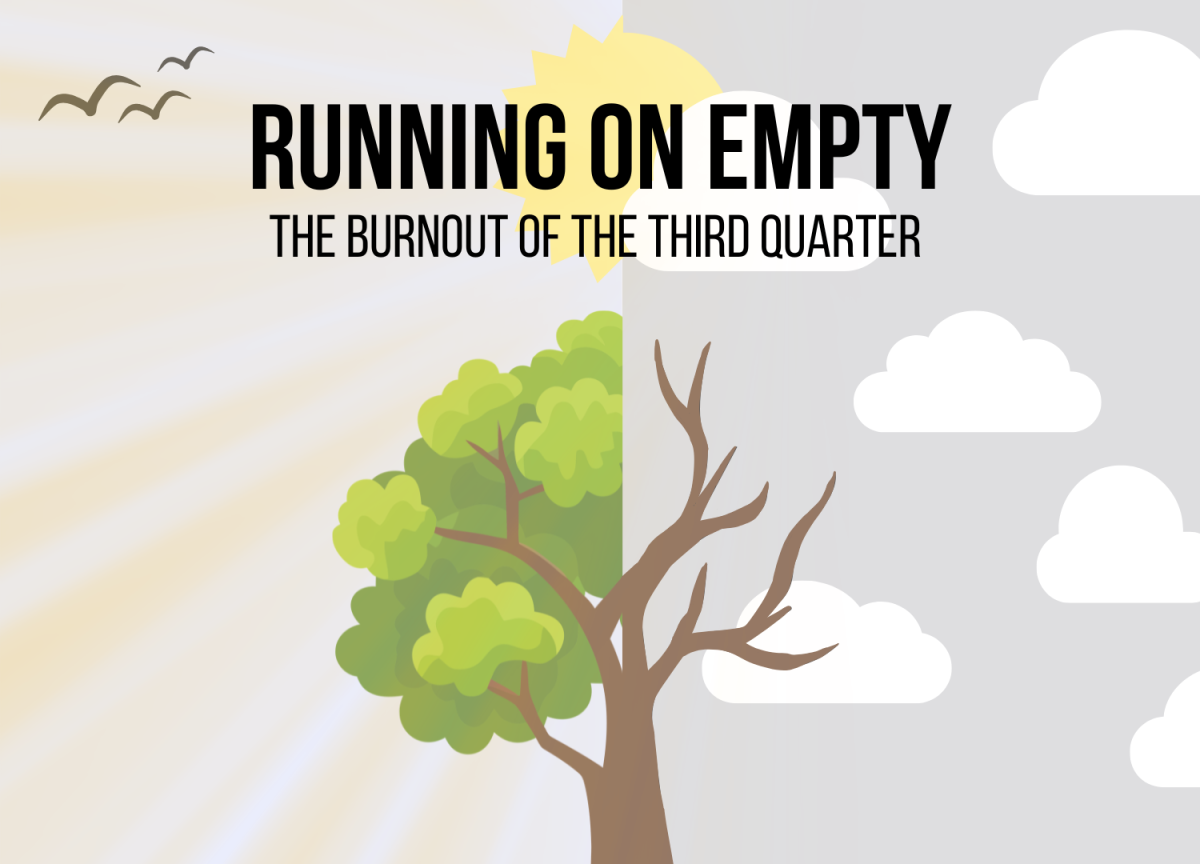
Filled to the brim with constant naps and complaining, the third quarter of the school year is renowned for being a drag. Students often feel more anxious as the end of the school year draws closer.
There are many factors that play into why the third quarter is so hard on students, the main ones being gloomy weather and a heavy workload.
One reason the third quarter is difficult for many students is the weather. Believe it or not, weather impacts our mental health more than we think.
Due to the lack of sunlight during the winter months, Seasonal Affective Disorder (SAD) becomes a concern. SAD is a type of depression that eases in the warmer months and worsens in the colder months.
SAD has a direct correlation with anxiety, especially in teens. The lack of sunlight also contributes to vitamin D deficiencies, which are strongly associated with increased anxiety, depression and mood swings.
Vitamin D is essential for serotonin regulation, as well as overall brain health. This vital vitamin serves as an antioxidant for brain tissue, so deficiencies can directly affect cognitive function, which influences anxiety and depression.
This is why SAD is less common in the summer months, when people receive more vitamin D from sunlight.
Another reason teens, as well as people in general, feel more anxious in the winter is because they spend less time outside. When temperatures are warmer, it is arguably much more enjoyable to exercise and spend time outdoors rather than in cold weather.
Several major studies have found that exercise reduces depressive symptoms similarly to antidepressants or therapy.
Exercise also increases dopamine, often referred to as the “happy chemical” in the brain. When exercising, dopamine increases by acting as a rewarding stimulus that signals the brain to release this neurotransmitter, reinforcing pleasure and motivation.
Dopamine levels are often lower in the winter months, especially during the third quarter, mainly due to the absence of sunlight.
Spending time in nature is also known to calm the nervous system and reduce anxiety and depression.
Another factor that stimulates anxiety during the third quarter of the school year is workload. Students often reach a point in the school year where every day starts to feel the same, and assignments become more difficult to complete. Students also worry about events such as the ACT, choosing a college, sports, school activities and completing everything before the end of the school year.
This buildup leads to anxiety and difficulty completing daily tasks.
Many students experience burnout, which is chronic physical, mental and emotional exhaustion caused by prolonged or unmanageable stress. Academic pressure to perform well also increases anxiety, especially among upperclassmen.
While the third quarter may seem never ending, knowing the reasons it feels so daunting can help students realize that burnout and feeling unmotivated is completely normal. Acknowledging that the quarter’s anxiety-inducing tasks is often the first step toward managing this universal experience.





Makenzie Spang • Apr 8, 2026 at 2:15 pm
This is a very real thing. This is covered amazingly well!
Ava Placek • Apr 8, 2026 at 10:07 am
Wow! Fantastic article! The person who wrote this is so cool!!