










































Picture a little girl at a doctor’s office, hearing big words she has not yet learned and having to ask, “What is that?” before turning back to her parents to translate — all while still having a baby voice that does not match the situation. That is the reality for many Hispanic children who have become their family’s translators.
This experience is known as language brokering. Language brokering occurs when a young person informally translates for their parents, including documents, healthcare visits, grocery store interactions and many other situations. Even though it may seem simple and easily brushed off, language brokering often places children in adult situations. Many times, children are put into uneasy situations where they have to translate, such as traffic stops, legal meetings, immigration-related matters and sometimes even their own parent-teacher conferences.
As children attend school and learn English, they gain an advantage their parents may not have. Hispanic parents often work long hours in difficult conditions to provide for their families and may not have the opportunity to learn English. Many work hard simply to survive.
As a result, their children become a bridge of communication with the outside world. The official language of the United States was set to English by executive order on March 1, 2025. Although an executive order is not a law, it is still a formal directive acknowledged by presidential authority.
Familismo is a key aspect of Hispanic culture, emphasizing the importance of prioritizing family over personal interests, often driven by love and loyalty — even when it means setting aside one’s own needs. Because of this, children frequently take on the responsibility of translating without questioning it.
In situations like these, roles are reversed. Parents listen to what their children are telling them, and those children become the adults, translating information their parents need to understand or actions they need to take.
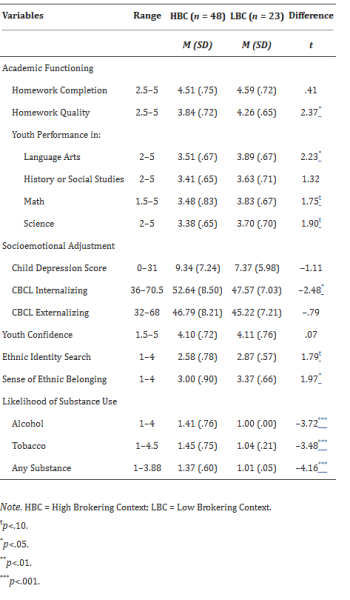
According to a study conducted by the National Library of Medicine, a United States government website, “In terms of outcomes for youth, adolescents in low language brokering environments evinced more positive adjustment than those in high brokering environments in a host of areas.”
The study showed that when children become informal translators, it can cause anxiety. Later in life, these translators may become more aware of the situations their parents are facing, which can make them feel responsible for helping and may cause confusion or fear. All of this can lead to unhealthy coping mechanisms.
Placing children in adult situations has both benefits and disadvantages. While adolescent translators may develop responsibility and maturity, they can lose parts of their childhood by growing up too quickly and facing situations not meant for children.
At times, parents may say rude or embarrassing things that children must interpret to someone else, which can cause them to feel embarrassed about their own family and how they act or speak.
While some families may see having their children interpret as a point of pride, others may view it as a failure of parenting for not providing the childhood their children could have had.
The little girl in the doctor’s office is not just translating words she does not yet know — she is carrying the responsibility and fear of misinterpreting words she cannot yet spell or say. She is expected to understand what an illness is and explain it to her parents. Yes, she is helping her family in a foreign country, but it may come at the cost of her childhood.


Makenzie Spang • Apr 8, 2026 at 2:31 pm
It’s sad how young kids are forced into certain social roles.