




































Mental health is defined as our emotional, psychological, and social well-being, affecting how we think, feel, act, handle stress, relate to others, and make choices. Your mental health is a complex, intimate thing that can either set you up for success or act as a hindrance. Although the recognition of mental health as a serious subject seems like a recent development furthering with each generation, emotions like anxiety, fear, anger, and grief have been playing a role in human evolution since the beginning of time.
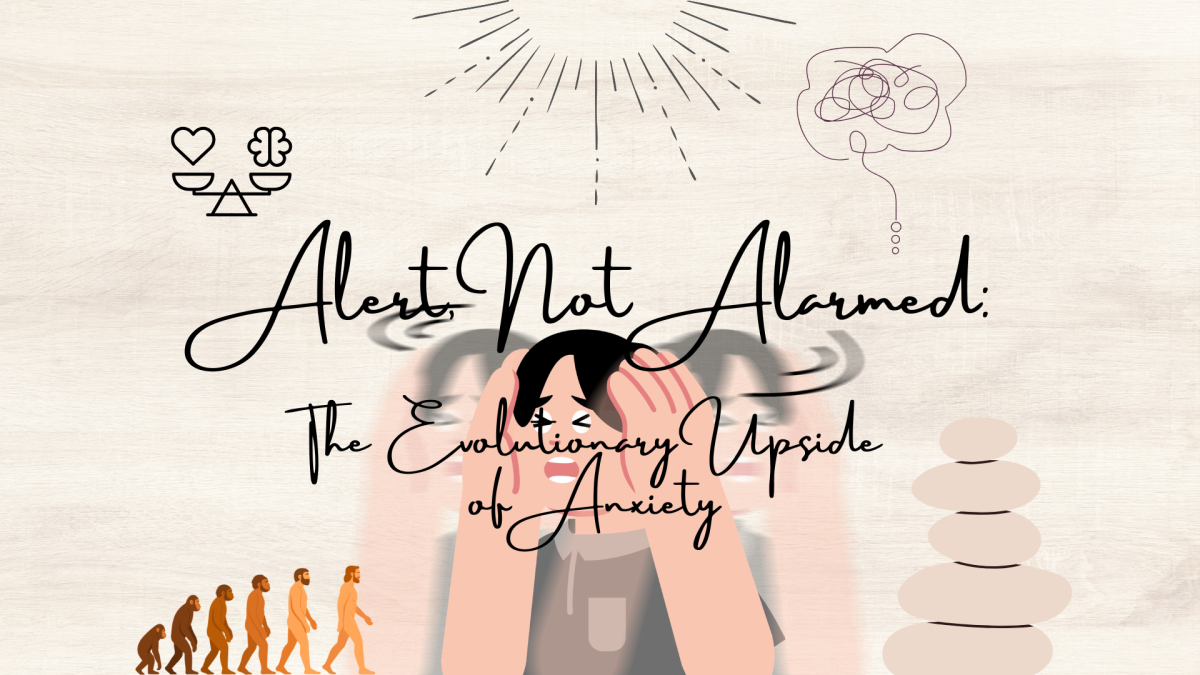
Anxiety can act as a kind of warning system for the mind and body, keeping a person alert and aware of their surroundings. In order to qualify as a living thing regardless of something being a multicellular organism or single celled organism, it has to be able to react and respond to stimuli. For example, even bacteria have learned to congregate around nutrients and avoid harsh chemicals.
Any species that exists here on earth today can only do so because of something called survival instincts. Although the first thing to come to mind when hearing the phrase “survival instincts” may be fight or flight or simple wilderness survival skills, survival instincts are actually much more intricate. Each individual person has a different armory of self preservation tactics, and each one of those tactics was planted inside the mind like seeds of experience.
If an early human had injured himself while walking barefoot, he would be cautious not to step foot on unknown surfaces in the future. This is because whether we like it or not, the experiences we have stick with us both consciously and subconsciously, molding us as individuals and pushing us forward as a society.
Emotions, particularly anxiety, can be a prominent factor influencing decisions regarding interacting with one’s environment partially because as humans we recognize and like to trust what we call our “gut instinct”, and partially because sometimes anxiety refuses to be ignored.
“We used medical science as a way to validate the endeavor of treating mental health as health,” Psychiatrist and author Tracy Dennis Tiwary said. “But what’s happened by making it a disease is we’re using the wrong metaphor in the end. And so now we can’t tell the difference between very valid anxiety disorders, which are distinct, from the human experience of anxiety. So we’ve lost the nuance, the emotional granularity. We’ve lost the acceptance that mental health does not equal the absence of emotional suffering or discomfort, that actually mental health is the engagement with emotional suffering and working through rather than around.”
It is crucial to know the difference between a healthy amount of anxiety and an obsession. When anxiety pushes you to be productive in fear of failing an exam, it can be considered a tool; however when it reaches a point of highly strung procrastination, it’s time to regulate your nervous system.




Makenzie Spang • Apr 8, 2026 at 2:24 pm
The cover makes this article enticing, very well done!