


































As a student, I have always been told that if I get good grades and focus on myself, everything will naturally fall into place. However, as a junior in high school, I have realized that this is far from true. As I navigate high school, it has become increasingly clear that the environment in which I am encouraged to work greatly affects my mood and motivation to continue learning.
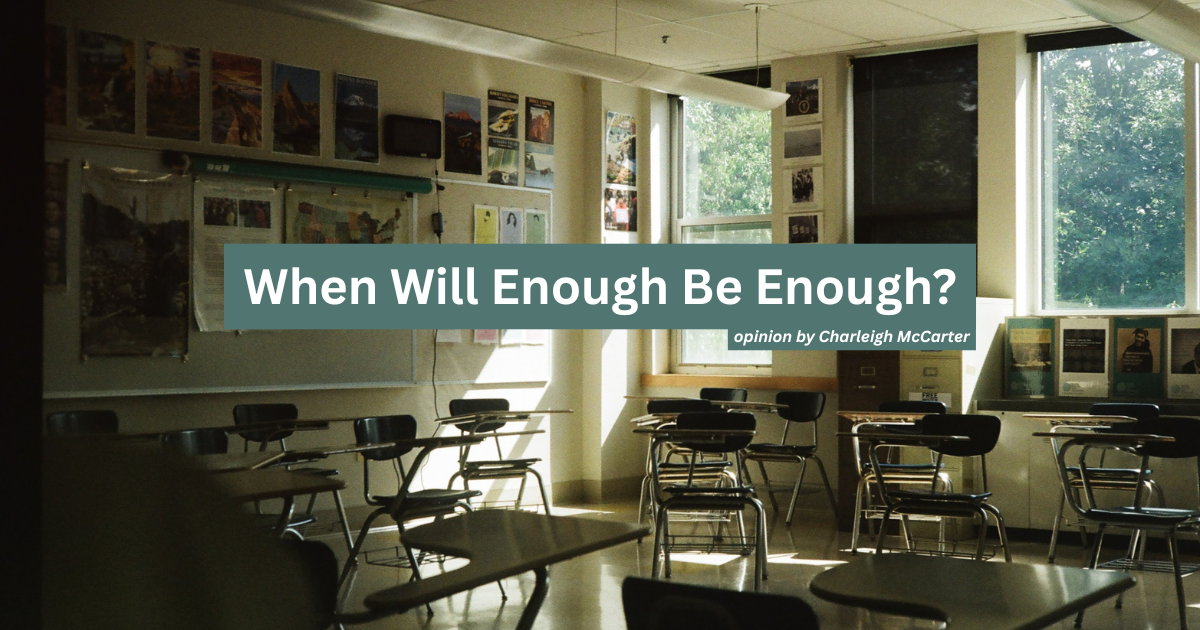
All of my classes have between 25 and 30 students, with one teacher responsible for educating us all at once. While I understand that this is not impossible, it is a challenging task. While an ideal student-teacher ratio is 20:1, writers at Education Advanced, a website that works with K-12 school districts, believe schools can do better with a lower number. “Ideally, schools should strive for a lower ratio to create smaller class sizes and promote student-teacher relationships that allow for individualized instruction that can bolster student achievement.”
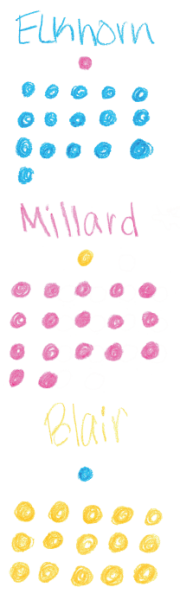
various neighboring school districts. (Annabelle Bignell)
Several nearby schools have much smaller student-teacher ratios. For instance, Millard boasts a ratio of 17:1, Elkhorn maintains 16:1, and Blair achieves an even smaller ratio of 15:1. These lower ratios allow for more individualized attention, creating a more effective learning environment where students are better supported and more likely to succeed.
Managing a room full of teenagers, who have a growing attachment to technology and a tendency to express their thoughts, often in derogatory or targeted ways, is no easy feat. I do not expect my teachers to manage such difficult circumstances for a small paycheck.
My first block is an honors American literature class filled with engaging discussions and read-alouds. With around 26 students, it’s one of my favorite classes, but I often struggle to focus and get my work done. The thought-provoking nature of the class requires individual attention, which can be overwhelming. I hesitate to ask my teacher questions, fearing that it will disrupt the flow or spark lengthy discussions when many want to dive into their work.
My second block, a math class, is a bit different socially, but the student-teacher ratio is still affecting it. Math is already one of my worst subjects. I’ve never been good at it and have always needed some extra assistance. Now, I dread going even more because I know my chances of getting help from my teacher are lessened with the 15-20 other classmates who also need her help.
The students in this class are quite chatty and unfocused most of the time. With a subject that is both difficult and time-consuming, I find the large number of students overwhelming. I often leave class feeling overstimulated, complaining that I can barely hear my soft-spoken teacher, who is simply trying to do her job while surrounded by students talking about who knows what.
With the population at an all-time high, the Fremont Public Schools district must consider these numbers to continue providing quality education and maintain easy access to learning opportunities. We have plenty of lovely opportunities to achieve a good education, but with this generation, where everyone is constantly looking at the worst of the worst, it has been made difficult on top of overpopulation.
I don’t believe the teachers are at fault. I know I wouldn’t be able to handle a group of teens either, but I wish there was a better solution to this situation. I’ve discussed this with some of my peers, and we all agree that this overpopulated environment significantly affects our learning. I know some teachers who seem overwhelmed by the noise and chaos. I have witnessed how difficult it is for them to finish their sentences without being interrupted. We are all struggling together over something as basic as wanting to pursue our education without distractions and overcrowding.
While I don’t expect any easy solutions to the ever-growing student population, I can’t help but worry about the situation as a whole. I prioritize my learning and dislike feeling selfish for trying to keep that up. Fighting to be heard in a larger classroom has involuntarily become the norm in school. It’s either succumbing to the number of students or succumbing to the actions causing distractions, leaving me—and others—feeling discouraged and lost.