










































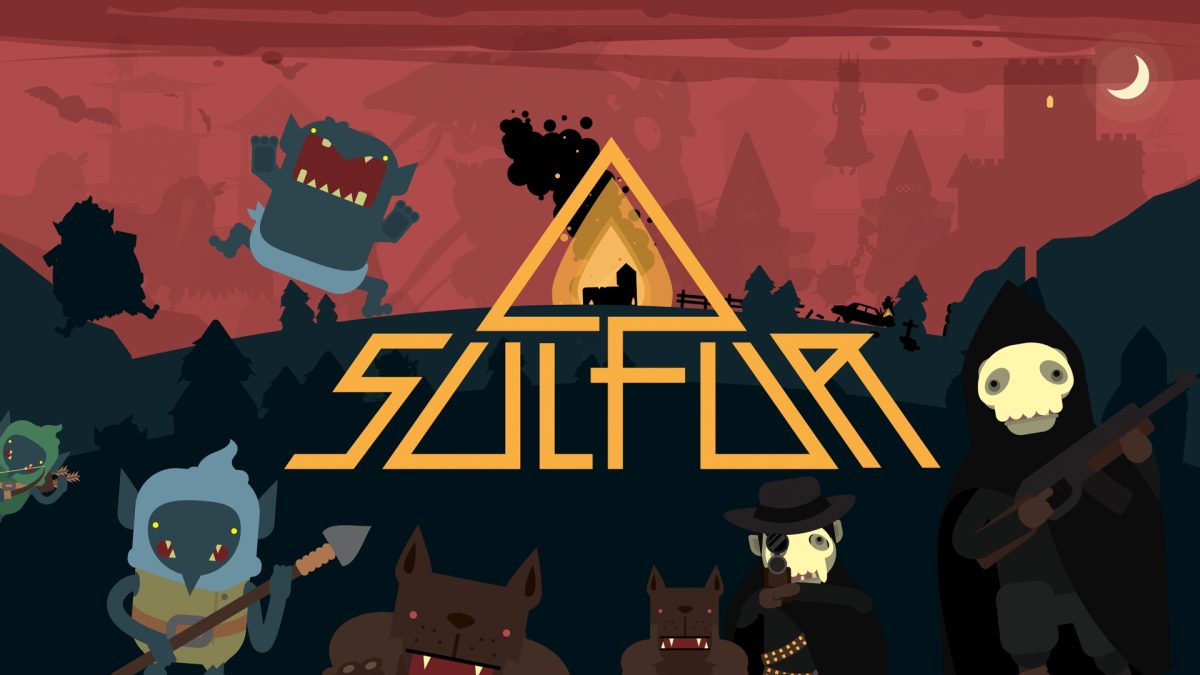
Between its goofy weapon designs, brutal difficulty spikes and addictive gameplay loop, “Sulfur” stands out as one of the more interesting indie games currently in early access.
The game follows a priest chasing down an evil witch through the afterlife after she burns down his church. With the help of his talking amulet, he begins a quest to take down the witch and her cohorts. Ironically, the plot is treated with complete seriousness while the game itself looks hilarious and bubbly, featuring a soft color palette and an art style reminiscent of the game “What The Golf?”
The gameplay loop is simple: enter one of the game’s many dungeons and attempt to reach the end. Along the way, players find weapons, armor, food and other items that can help throughout the journey, similar to games like “Borderlands.”
However, one death means everything being carried is permanently lost. Players can use their amulet to return safely to their church in the afterlife, but only if the amulet is charged. This creates an addicting gameplay loop filled with fear and adrenaline that keeps players coming back for more.
Alongside the wide selection of guns, players can also collect modifiers that enhance different weapon attributes. These include attachments, oils and elemental scrolls, each fundamentally changing the weapon they are applied to, assuming the weapon has an available slot. Weapons gain more slots simply through use, and attachments can be swapped out whenever possible.
The different oils and effects allow players to create some genuinely ridiculous weapons if they know what they are doing, from practically infinite-ammo light machine guns to weapons with terrible range but unbelievable damage. The game almost encourages players to become emotionally attached to their bizarre creations before inevitably losing them forever.
Speaking of weapons, the designs are hilarious. Nearly every weapon in the game has some kind of intentionally goofy flaw built into it. Players are almost guaranteed to equip a new weapon, notice some ridiculous issue and laugh about it for a while.
Unfortunately, not every weapon feels balanced. For example, the submachine gun known as the Ferryman deals high damage, but its recoil makes it nearly unusable, even with the correct oils and attachments.
Another entertaining feature is the food system, which serves as the game’s only healing mechanic. Some foods are recognizable to American players, but many dishes are inspired by European cuisine. Nearly every item found throughout the game can be combined into some kind of dish, with the exception of poisonous mushrooms.
Despite its strengths, the game struggles with enemy variety and difficulty balancing. The first level contains spacious rooms and weaker enemies, but only a few enemy types appear repeatedly. Once players reach the second level, however, the difficulty suddenly spikes.
Tight hallways, dead ends, stronger ranged enemies and armored opponents make the second dungeon feel overwhelming compared to the opening section of the game. At least the deeper levels provide more food ingredients because players will definitely need them.
Another major issue is the lack of bosses. By the seventh dungeon, there are only three bosses in the game. The first boss is extremely easy, while the second boss — encountered four dungeons later — is dramatically more difficult. Immediately afterward, players encounter a boss that only takes damage when hit in very specific locations.
The sharp increase in difficulty can become frustrating, even while using strong armor and carrying large amounts of healing food.
Overall, “Sulfur” is a strong early-access indie game with a lot of personality. Its humor, weapon customization and addictive gameplay loop make it stand out, even if the balancing issues can occasionally become overwhelming. Players looking for a challenging but goofy dungeon crawler may want to give this one a try.