




































Is it that time of the month? This is a question many young girls and women have to face anytime they’re a bit of a displeasure to be around. While the immediate assumption that women are only emotional when they’re going through the menstrual cycle is a topic within itself, there are other factors that demand attention.
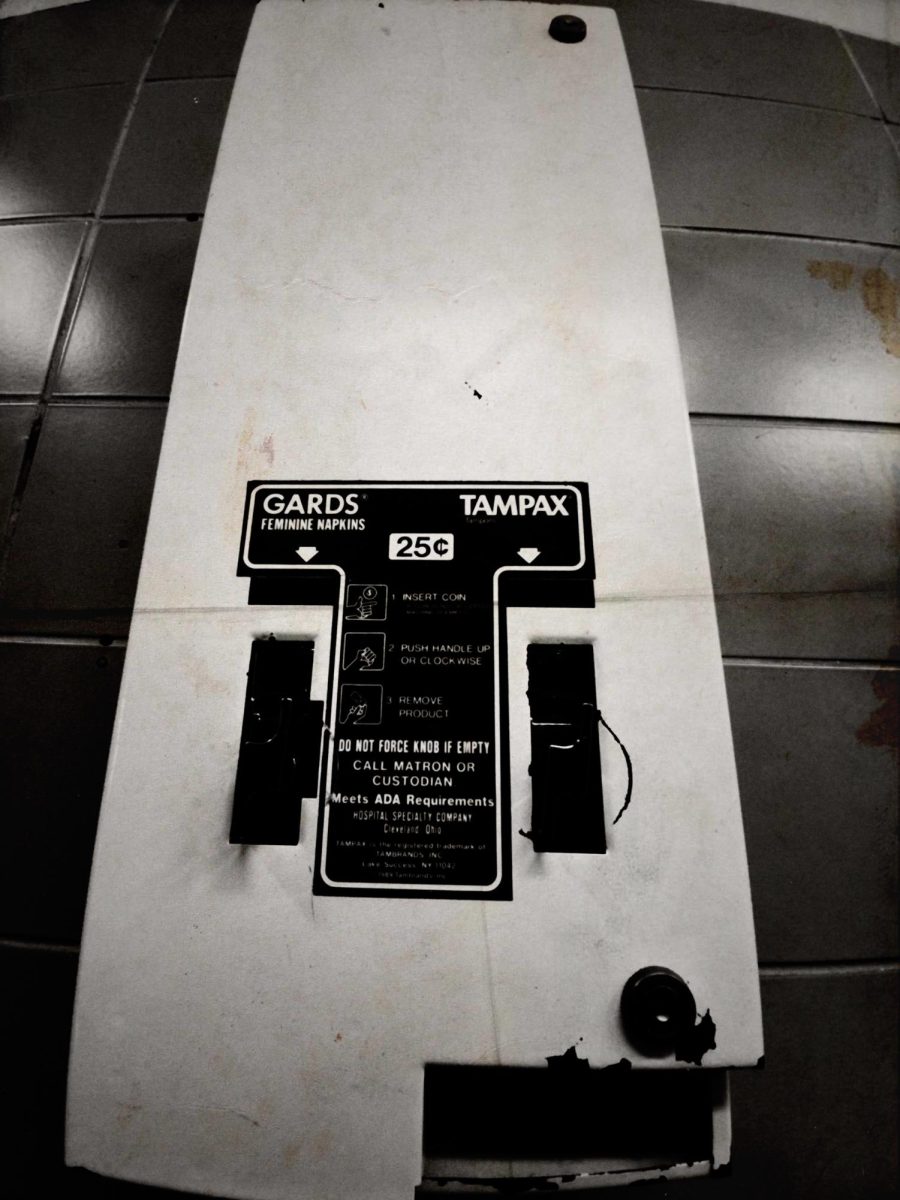
Getting up for school while on your period is another kind of hell, but walking into a place required by law during this time where needs are not met only makes it much harder. Before researching for this article, I hadn’t ever attempted to get a pad or tampon from the dispensers in the restroom (When attempted, I was told they had been broken for months). My immediate assumption was that it wouldn’t work, so trying was pointless. This is the sad reality of being a girl in public schools.
The highest responsibility of any school is to provide a safe educational environment, but part of providing a safe environment is keeping a comfortable environment for all students. Students cannot be expected to be comfortable when half of them have to pay for a basic necessity.
Schools are legally required to accommodate all students, this includes basic hygiene needs. While one could argue that since the nurses have these necessities in stock, the schools are accommodating, but that doesn’t factor in how uncomfortable it can be going into the nurses office to ask for something that should be readily available right outside of the bathroom stall.
While this certainly isn’t only an educational building issue– as basic healthcare needs are not easily accessible in all parts of the world, schools should legally be obligated to offer menstrual care products if students are legally required to be at school.
When the restroom is out of toilet paper, you tell a staff member and it’s refilled within the hour, but when the menstrual product dispensers are empty, you tell a staff member and they tell you to go to the nurse.
“I think that the products should at least be in them because some girls are scared to ask people and may not know certain teachers who have these products in their rooms.” Sophomore AnVilicia Irizarry said.
At Fremont High School, an e-hall pass is required to go to the nurse’s office. Students must also fill out their reason for visiting the nurse on their pass, which can be mortifying if your teacher is male, or just in general as some people are more embarrassed about their periods than others. Embarrassment is learned, of course, people are only embarrassed because they were taught to be. A simple “ew” thrown into a conversation about menstrual cycles can go a long way for the self esteem of a young girl.
Clearly, this is an issue. No matter how often this topic is brought up, nothing has been done about it, and there aren’t any public plans for accommodating in the future. Teachers are doing their best to combat this with a supply of menstrual products for students, but that raises the question of whether or not they should have to.
While supportive and helpful beyond measure, menstrual products should be provided by the school district, not its teachers. You shouldn’t even have to ask another girl in the bathroom for a pad—not when an empty product machine is plastered on the wall beside you.
“I think they should work because some people can’t afford to buy them or are too scared to ask their parents.” Sophomore Emma Chandler said.
Whether taken up with Fremont Public Schools or the Department of Education itself, adequate feminine hygiene products should be required in school bathrooms for the comfort and convenience of students.

Catalina Velasquez • Apr 28, 2026 at 10:28 am
shows the gap between what schools should provide and what actually happens