





































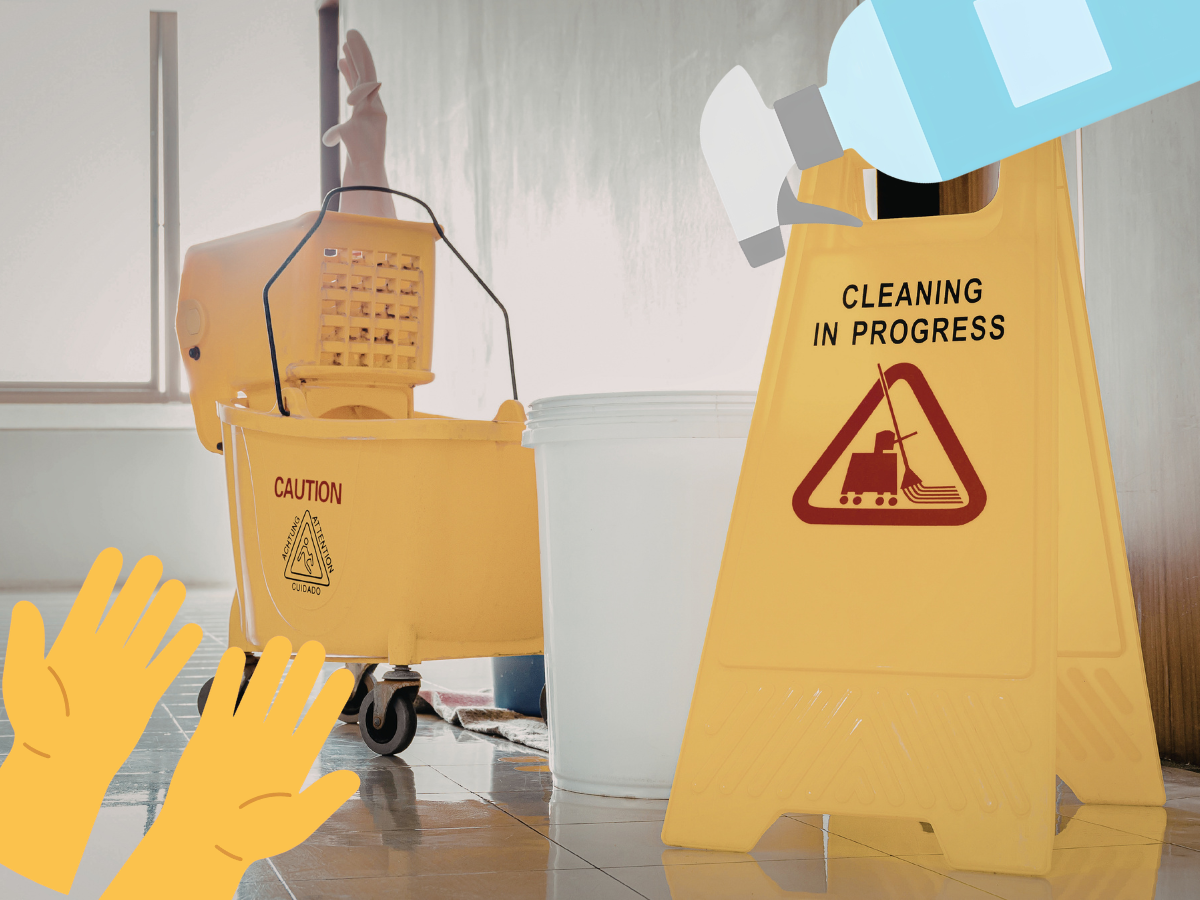
When students throw milk cartons into toilets or smear ink across school floors, someone has to clean it up. For generations, janitors have been that someone. But, despite their role, they’re becoming overlooked and underappreciated — not only at FHS, but by the public as well.
Janitors maintain cleanliness, sanitation, and safety in residential, commercial, and institutional buildings — but what they do goes beyond simply cleaning. Outdoor maintenance, monitoring heating and cooling systems, and repairing minor electrical and plumbing problems are all part of a facility’s upkeep.
Silvia Villa, one of Fremont Middle School’s custodians, expressed how she felt about the students and her job.
“I’ve been working for seven years,” Villa said. “What attracted me to this job is that I like to clean.”
Despite Villa’s love for cleaning, the job also presents challenges.
“Children throw empty cartons of milk and juice into the toilets, use the toilets as usual, and clog them,” Villa said, “The water in the toilet then begins to overflow — along with everything that’s inside of it.”
Villa continued to explain what challenges she faces while working at Fremont Middle.
“Another thing is that they break pens and smear the ink on the floors or other surfaces — it is very difficult to remove. Even so, the folders or floors are likely to be damaged either way.”
While custodians play an essential role in keeping schools clean, their work also has significant public health implications.
Disease Intervention Specialist (DIS) Anna Liston of the Three Rivers Public Health Department stated commercial cleaning goes far beyond a labor-intensive position.
“A janitor’s contribution to disease prevention and their connection to reducing viruses is very important,” Liston said, “A janitor contributes to routine cleaning, disinfecting shared surfaces, managing waste, and maintaining proper sanitation standards, which creates a safe and clean environment for employees, staff, visitors, and the community.”
Many have historically argued that building services is not a part of the health care ecosystem — essentially excluded from the “hero” narratives afforded to doctors and nurses.
“I would argue janitors directly impact public health,” Liston said, “The work that they do — limiting bacteria and viruses in the school — helps reduce absenteeism, protect individuals who may have underlying health conditions and weak immune systems, and support overall productivity.”
Research supports the idea that sanitation in schools plays a major role in preventing illness. A 2022 study conducted by Reham F. El-Kased and Noha M. Gamaleldi, both professors in microbiology and immunology, found that schools are a hotspot for various infections or diseases. Both Gamaleldi and Kased observed two different schools for this study – one public school and one private school.
“Thirteen different types of bacteria with different amounts were isolated from 176 samples collected from different surfaces,” the article said, “It was found that the number of bacteria in public school is higher than that of the private school.”
Although more bacteria was found in public schools, both were still at a high risk of sickness, as mentioned in the article. Sharing contaminated items, poorly ventilated spaces, high-touch surfaces, and remaining in close contact all contribute to the spread of affliction.
Fremont High School principal Myron Sikora takes pride in keeping his students safe from many threats— including disease.
Sikora further explained how the school’s janitorial staff contributes to the safety of the school.
“We have two regular shifts of custodial staff. One is during the day when all of the students are still here, and one at night — we have a whole night crew, actually,” Sikora said, “Depending on the season, they will do additional things like sanitizing frequently touched surfaces such as doorknobs and desks.”
Sikora urged students to make their job a little bit easier with the simple act of throwing away their trash or making up for any spills.
“From setting up lunch tables to preparing assembly stages and maintaining a safe environment, their responsibilities stretch far beyond what most students realize,” Sikora said, “If we truly value our school community, we should start by making their jobs easier, not harder.”
Despite how important janitors are, their pay, appreciation, and recognition continues to remain in the shadows.
A 2025 study by Training Magazine highlighted that fact, pointing out that a staggering 20% of Americans admit to never thanking their garbage collector, and another 12% regret it. 44% of Americans also consider janitorial services as the most important, yet underappreciated profession out there. While catching your local garbage collector can be difficult, we should not continue to be oblivious to the matter. Some simple things we can do are throwing our trash properly, respecting bathrooms, and avoiding any damage to property.
Though their work often goes unnoticed, janitors play a critical role in maintaining safe and healthy environments. Recognizing their contributions—and making their jobs easier through simple acts of respect — can help ensure schools remain clean, safe, and welcoming for everyone.
“They may operate behind the scenes,” Sikora said. “But they are the backbone of our school.”
Mayrin • Apr 30, 2026 at 1:19 pm
Janitor’s are always very overlooked or just treated as servants which is not what they are. We should be appreciative for their work by helping keep the building clean and not take advantage of it and throw unnecessary things everywhere. Amazing article!!
Catalina Velasquez • Apr 28, 2026 at 10:30 am
Great article highlighting people we often overlook