








































As more students in Fremont’s certified nursing assistant program prepare for careers in health care, artificial intelligence is becoming an increasingly important — and debated — part of the field they are entering.
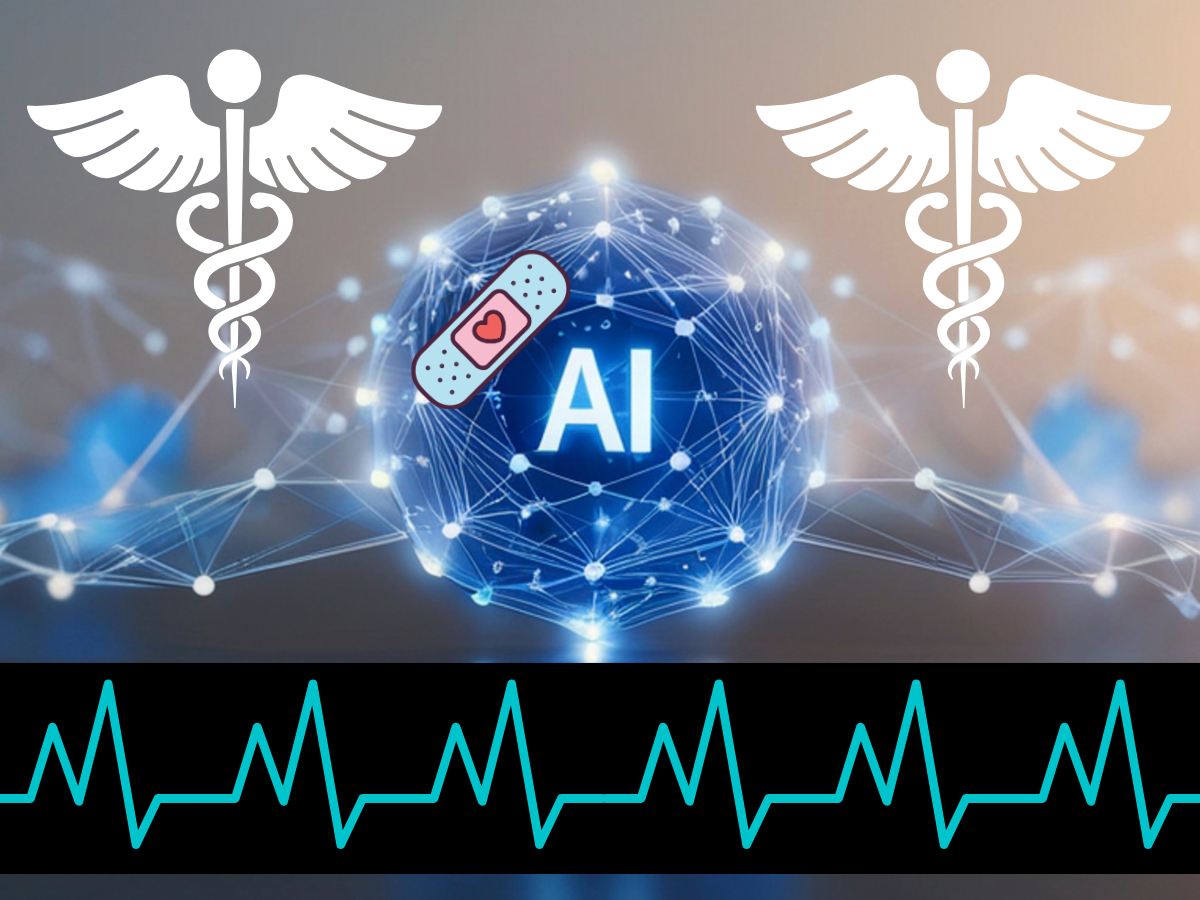
Artificial intelligence (AI) in the medical field provides helpful assistance for health care professionals, allowing them to do their jobs more quickly and efficiently. However, it also brings significant risks for protecting people’s privacy now and in the future.
Medical practitioners use AI to analyze images and make diagnoses with better accuracy. It can detect early stages of diseases such as cancer and diabetes using tools like ultrasounds and mammograms. AI is also used with X-rays and computed tomography (CT) scans to classify images. Any medical emergencies detected in a patient’s body can be immediately flagged and reported to the medical team.
Physicians use AI to help make diagnoses, discover drugs, track health changes, improve communication with patients and provide better patient experiences both in person and remotely. AI uses past data to determine what has worked well for other patients.
AI also contributes to medical research by analyzing disease patterns to better understand how diseases work. It can discover biomarkers that predict disease risk and treatment success and help provide personalized treatment based on a patient’s unique needs. AI can identify health trends and make clinical trials more efficient by finding ideal participants. It also reviews a patient’s medical history for genetic and other relevant information when developing treatment plans.
In addition, AI has been used to handle administrative tasks. These include AI-powered chatbots that provide basic health information, virtual assistants, remote consultations, appointment scheduling, transcribing medical documents, medical coding and sending reminders.
According to the National Institutes of Health, AI played a significant role during the COVID-19 pandemic by notifying patients through text messages if they had been diagnosed with COVID-19 and needed to quarantine.
Fremont senior Martina Alonzo Gomez, a certified nursing assistant (CNA), has seen how AI is used in health care.
“There’s some benefits. AI in the medical field is like doing some simple math, like Roman numeral numbers [and] knowing military time,” Alonzo Gomez said.
Despite its advantages, AI use comes with limitations. Its performance depends on large amounts of high-quality data and patterns collected from places that use AI. Because AI is used more often in higher-income countries, it can provide less accurate results for lower-income populations. People who are not represented in the data can become invisible, reinforcing inequality.
“More than 80% of genetic studies include only people of European descent, which represents less than 20% of the world’s population,” Deutsche Welle reported.
When analyzing images, AI systems can also be biased and perform poorly for certain groups. For example, research on conditions such as skin cancer and cardiovascular risk has largely been conducted on people with lighter skin tones. As a result, AI may overestimate or underestimate risks for people with darker skin tones. This can lead to misdiagnoses or delayed and ineffective treatment in serious situations.
Trust can also become an issue. Communities that experience errors from AI may begin to lose trust not only in technology, but also in health care workers and institutions.
Ethical concerns are another challenge. Some patients wish to remain private, but AI technologies such as facial recognition and genetic analysis can identify individuals. There have also been incidents involving unauthorized access to sensitive data. If patient information is not properly protected, insurance companies could potentially deny coverage based on genetic risks.
Patient privacy can also limit how much data is available for AI systems. With restricted data, AI models may never reach their full potential.
Accountability is another concern. Health care professionals may begin to rely too heavily on AI, which could affect their decision-making. AI can also prioritize certain tasks over others, which may not always be appropriate. Overreliance on AI could reduce critical thinking and judgment, even in emergency situations.
According to the Healthcare Information and Management Systems Society, a balance is needed to prevent job loss and ensure proper treatment for patients. Health care workers must learn to adapt to AI without relying on it entirely. The World Health Organization has advised professionals to use caution, noting that AI is not meant to replace medical judgment and can cause harm if misused. Experts say health care professionals should remain the primary decision-makers in patient care. AI continues to be developed and tested, and access to the technology varies across the world.
Mayrin Lopez • Apr 30, 2026 at 1:21 pm
amazing article!! I love how it talks about the benefits of AI use in the medical field
Catalina Velasquez • Apr 28, 2026 at 10:32 am
Very great article about AI being in healthcare