











































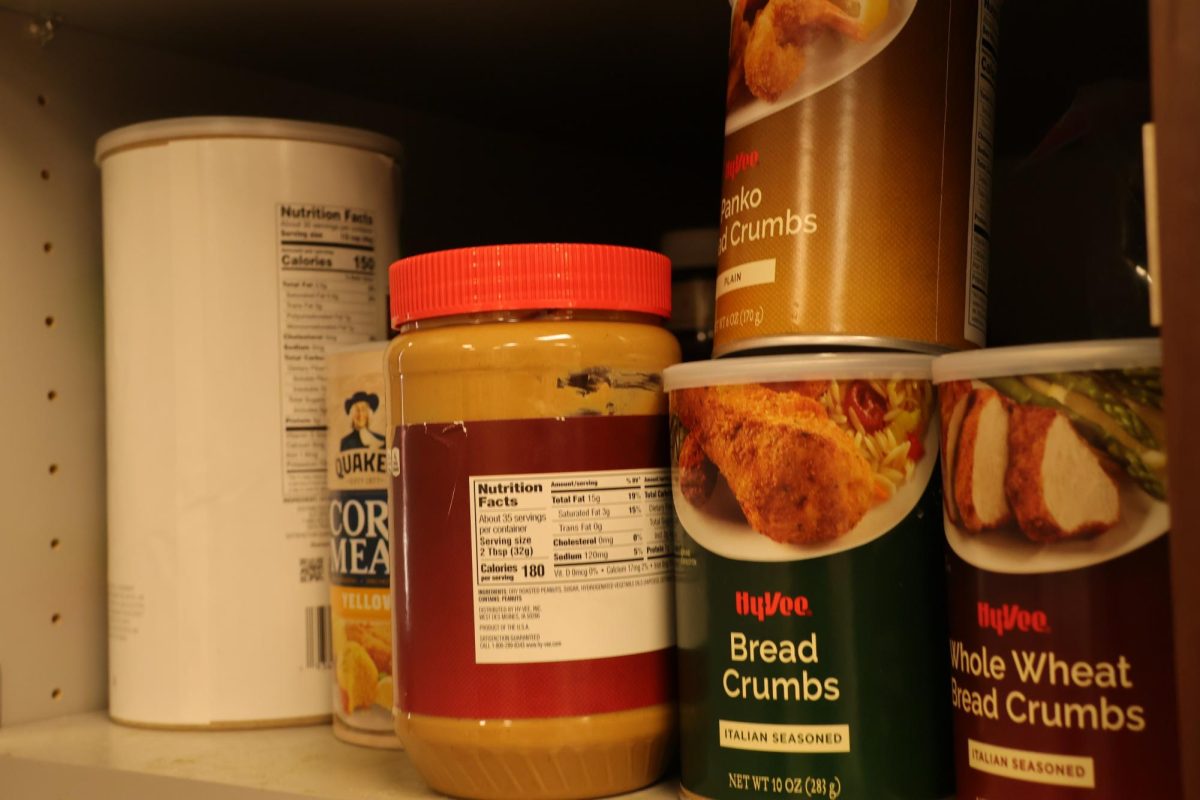
As grocery prices continue to climb, families are being forced to rethink what ends up on their dinner tables, often at the expense of fresh, healthy food.
Inflation is the rate of increase in prices over time. While inflation is generally a broad measure, it can also be calculated more narrowly for specific goods, like food, and for services. Healthy foods, for example, rely on labor, transportation and refrigeration, which makes them more expensive. Unhealthy foods, on the other hand, last longer and are cheaper.
Access to healthy foods has become increasingly difficult, making them harder to obtain for many low-income families in particular. Distorted food prices have not only caused low-income families to rely on ultraprocessed foods, but have also increased diet-related diseases, leading to higher health care costs across the community.
High school culinary arts teacher Erin Kennedy has experienced this problem firsthand and described how rising food costs have affected her work as a teacher.
“I’ve been teaching since 2009, and prices generally don’t go down — even after economic conditions improve,” Kennedy said.
Kennedy also described how difficult it has become to provide for her own children.
“Unfortunately, I’m not as able to afford as much fresh produce as I used to for my kids and myself,” Kennedy said. “We’re depending more and more on frozen, canned and processed foods, as well as multivitamins, to get what we need to stay healthy. These foods do not taste as fresh and have different textures than their fresh counterparts — therefore, my kids don’t enjoy them as much, and they’re less likely to eat them.”
Beyond concerns about children’s well-being and their diets, Kennedy explained how rising costs have altered her students’ cooking experiences in lab classes.
“Due to the rising price of produce, we’ve had to fundamentally alter the labs that we do with students,” Kennedy said. “We have also had to cut or limit labs to certain ingredients, which limits the experiences that we’re able to provide to students. I’ve also had to change overall experiences and limit the quality of the education I’ve been able to provide.”
While providing for a classroom is one challenge, senior Levi Perez finds himself in a similar situation, at times having to pitch in his own money to help support his nine-member family — a household of seven boys and two parents.
“We rely more on using the money we get from the government that gives us only the amount necessary for us to use, meaning we don’t really use our money the way other families do,” Perez said. “It’ll be a struggle to gain access to many foods if prices continue to rise, and it will also affect other families in need.”
Due to price increases, Perez and his family have also had to avoid certain foods because of affordability, like many other families.
“Restaurants, buffets and sometimes food from amusement parks — they’re pretty expensive,” Perez said.
Global events have also played a role in rising food prices.
Events such as the COVID-19 pandemic, a highly pathogenic avian influenza outbreak and the conflict in Ukraine have all been major influences on rising costs. This has caused many families to take measures to keep food on their tables, which has prompted government action aimed at addressing the issue.
Multiple programs have been put in place to narrow the gap between healthy and processed foods. The United States Department of Agriculture has played a major role in funding programs such as GusNIP, HFFI and SNAP.
Beyond their conventional “good taste,” junk foods are intentionally designed to be appealing. Research dietitian Dalia Perelam at Stanford University confirmed this phenomenon.
“They formulate the taste of the food to what is known as the ‘bliss point’ — the precise combination of sugar, salt and fat to maximize palatability, which encourages overconsumption,” she said.
A 2022 University of Warwick study also found that Americans pay 40% more for fruits and vegetables due to high fixed costs in supplying them to markets, resulting in lower consumption of these healthier foods. Research further shows that diet-related diseases such as cardiovascular disease, Type 2 diabetes, obesity and liver disease have been estimated to cause 1.5 million to 5.5 million deaths annually. A study published in the British journal The Lancet further supports this, concluding that one-fifth of deaths worldwide are associated with poor diets.
“These numbers are really striking,” Dr. Francesco Branca said, who was formerly the World Health Organization’s top nutritionist.
For families already struggling to afford groceries, those numbers reflect more than statistics. They shape what ends up on their plates every day.

Mrs. Uttecht • May 5, 2026 at 12:56 pm
Americans paying 40% more for fresh produce is insane. This unfortunately is the reality for many American families as they are struggling to put quality food on the table. Very nice article!
Juana Hernandez Tziquin • May 4, 2026 at 3:01 pm
This is all so true rising of goods and products have raised and that has affected many families because what if they were bearly getting by and now that prices have raised it it harder for families to even have a nice family dinner due to the prices.
Jana Kellett • May 4, 2026 at 12:28 pm
Good interviews, Angela!
Mayrin Lopez • Apr 23, 2026 at 7:56 pm
It’s sad how some people have to live off of over processed foods just because they can’t afford the organic foods. It’s not fair that the healthy options are so much more expensive.
Catalina Velasquez • Apr 22, 2026 at 9:28 am
This article shows how rising food prices are making it harder for families to eat healthy, especially those with lower incomes.