
























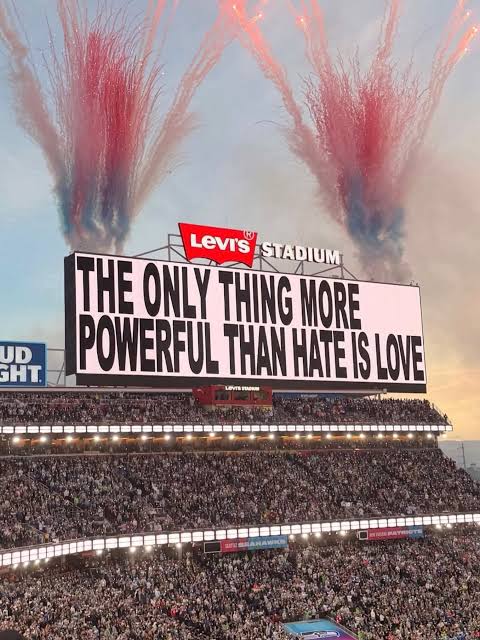
When the NFL announced Bad Bunny as the Super Bowl’s halftime show pick, a wave of reactions across social media arose from his long-term fans, sports fanatics and casual scrollers. For some Super Bowl fans, the news resulted in a moment of celebration and pride; for others, it sparked a feeling of anger and concern over the audience’s expectations and identity of one of the most anticipated sporting events in American entertainment.
The backlash surrounding Bad Bunny’s selection reveals that the outrage has less to do with music preference and more to do with who is considered “American enough” to represent the nation on its biggest stage. Much of the backlash focused on his language, musical style and perceived lack of American representation, despite Puerto Rico, his home, a U.S. territory.
The criticism quickly extended beyond social media. President Donald Trump’s former campaign manager, Corey Lewandowski, escalated the controversy on “The Benny Show,” putting his strict political stance on display.
“There is nowhere that you can provide safe haven to people in this country illegally. Not the Super Bowl and nowhere else,” Lewandowski said. “We will find you. We will apprehend you. We will put you in a detention facility, and we will deport you.”
Although Bad Bunny himself is a U.S. citizen, comments like those made by presidential and political figures reflect how the opposition to his performance goes far beyond his music and into more serious debates about national identity.
This confusion was reflected in a widely circulated interview clip featuring political commentators Tomi Lahren and Krystal Ball. When asked about her viewpoint on his selection, Ball seemed rather indifferent.
“I’m not that knowledgeable about him, but it seems fine, and I don’t know why it’s a big deal,” Ball said. “Seems like a great American artist, so sure.”
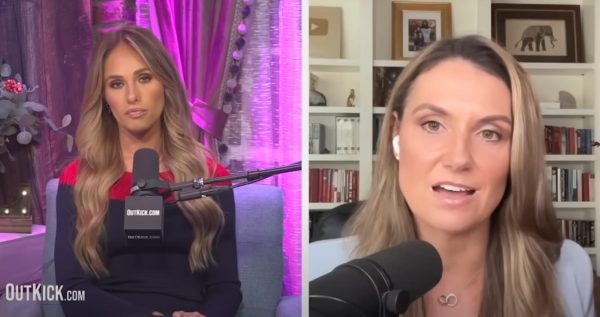
Interjecting, Lahren adds, “Not an American,” to which Ball pushes back, saying, “He’s Puerto Rican. That’s part of America, dear.” The exchange quickly gained traction online, highlighting the lack of understanding surrounding Puerto Rico’s political status and citizenship itself. While the interaction was not particularly heated, it revealed how misinformation can contribute to unnecessary division.
This confusion over identity isn’t new—and a look at past halftime performers shows how narrow mainstream expectations once were. Looking back at Super Bowl headliners in the early 2000s, performers were not exclusively white, or American-born, with artists like U2, Paul McCartney and The Rolling Stones. These picks, however, still reflected what was considered “mainstream” within a Western, English-speaking framework. In contrast, the past decade has marked a noticeable shift toward more diverse ethnic, racial and cultural representation with performers like Beyonce, Usher, The Weeknd, Shakira and Bad Bunny.
Supporters of this decision argue that he is a strong and rather timely choice regarding current events. With Latino and Hispanic communities flourishing across a wide portion of today’s cultural landscape, many believe his selection represents the long-overdue recognition.
To add another layer to this whole situation, Bad Bunny previously joined Shakira onstage during her headline performance in 2020, making his presence far from unprecedented. This raises an important question: if Latin artists have been welcomed in earlier performances, why has his solo headlining role sparked such intense backlash?
When viewed through a broader lens, themes of duality, cultural representation and evolving identity consistently appear throughout Bad Bunny’s music and lyrical storytelling.
Benito Antonio Martinez Ocasio has risen to fame since his musical debut back in 2010 as part of the explosion of reggaeton and Latin rap. Over the years, his music has topped charts, broken streaming records and expanded the reach of Latin music for both Spanish-speaking and mainstream pop audiences. His most-streamed album, “Un Verano Sin Ti,” was the first full-length Spanish album to hit 20 billion streams on Spotify, a record that has yet to be broken.
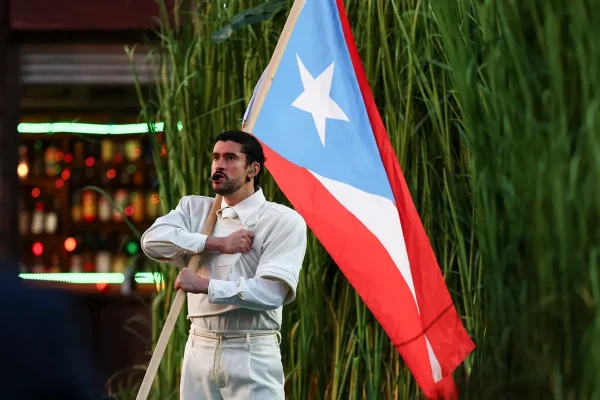
As an artist, Bad Bunny is known for his versatility and unpredictability. His music ranges from energetic club tracks to introspective retellings about fame, mental health, heartbreak and his hometown. Outside of his music, he has also become a familiar face for breaking gender norms and practicing self-expression. This dedication to challenging social ideals and representing his country with pride is another major reason why his Super Bowl appearance became such a widely discussed debate.
While there is always some backlash to the halftime pick, this ongoing tension seems to have taken a far more political and troubling turn. What was meant to be a unifying, traditional event was overtaken by political figures who instilled fear, anti-immigrant rhetoric and public intimidation to undermine both the artist and the communities he represents.
Ultimately, the backlash surrounding Bad Bunny says less about his music and more about who is deemed “American enough.” The question was never whether Bad Bunny belonged on the Super Bowl stage, but why some audiences still struggle to accept that American identity can sound, look, and speak differently than they expect.

Jon Shaw • Apr 15, 2026 at 1:17 pm
Well written. Not many opinion pieces are so thoroughly researched. I came away with a much better understanding of the issue and the different American perspectives on it.
Mayrin Lopez • Apr 13, 2026 at 9:11 pm
Really enjoyed reading this article! The super bowl was amazing and really sent a great message.
Danna Jamaica • Apr 10, 2026 at 6:35 pm
Love this article, a lot of truth was told here.
Madelyn Pablo • Apr 10, 2026 at 2:28 pm
You did a great job, Cassandra. Congratulations—I loved the article.
Sophie Henderson • Apr 10, 2026 at 8:23 am
I love how your article said exactly what needed to be said without making it seem one-sided. It comes to show that the ordeal with Bad Bunny was made bigger than it needed to be, especially when he is a U.S citizen.
Nelda M. Campbell • Apr 10, 2026 at 7:36 am
Cassandra Santillan you are an outstanding journalist. You saw and reported exactly what needed to be said. Our country is in a sad place right now. It does not help that our political leaders seem to encourage the unrest in our country. Keep up the good work you are doing!
Mr. Kavan • Apr 9, 2026 at 2:40 pm
Intelligent presentation as opposed to the ignorance about Puerto Rico being part of the US.
Catalina Velasquez • Apr 9, 2026 at 9:51 am
Lowkey this is a really good take. People made it way bigger than it needed to be.
Gianna • Apr 8, 2026 at 2:39 pm
Bad Bunny so peak
Becky Tighe • Apr 8, 2026 at 12:33 pm
I agree – a very well written article! I liked when Lady Gaga joined in!
Kyla Stroscheim • Apr 8, 2026 at 12:04 pm
I absolutely love this article and I loved the Super Bowl!
Madison Vaughn • Apr 8, 2026 at 11:21 am
This was an awesome article!!
Mrs. Uttecht • Apr 8, 2026 at 10:18 am
Very well written! Nice job Cassandra!